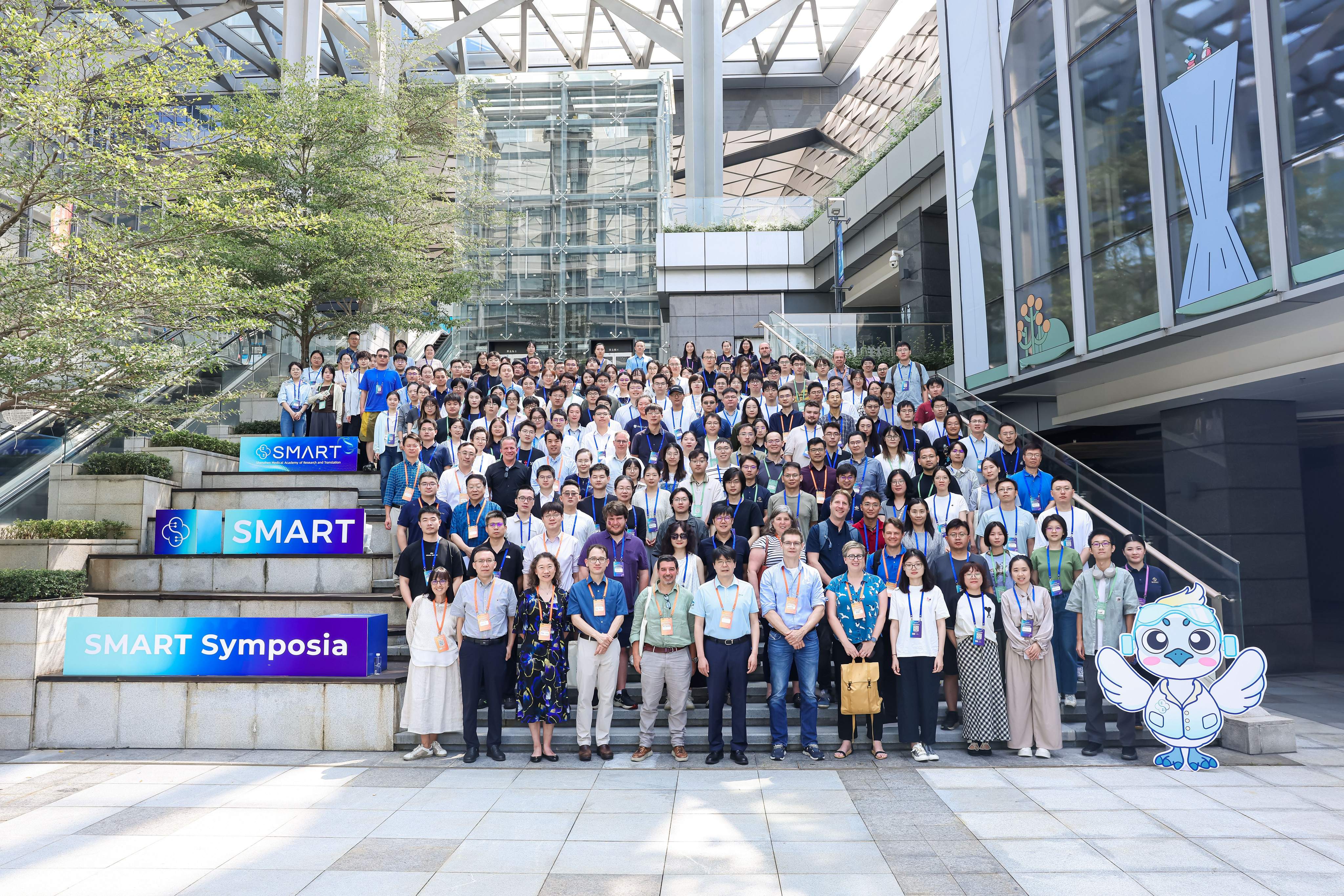
The "SMART Symposium on Pyroptosis and Gasdermin Biology," hosted by the Shenzhen Medical Academy of Research and Translation (SMART), was held from September 9 to 11, 2026, in Shenzhen's Guangming Science City. The symposium was jointly initiated and organized by Vishva Dixit (Genentech), Veit Hornung (Ludwig Maximilian University of Munich), Feng Shao (National Institute of Biological Sciences, Beijing), and Hao Wu (Boston Children's Hospital & Harvard Medical School).
The symposium took Gasdermin proteins as its central theme, with an agenda-setting and communication format modeled on leading international academic conferences. It systematically examined the diverse functions of Gasdermin proteins in both inflammasome-dependent and inflammasome-independent settings, across multiple model systems and human biology. Presentations and discussions covered recent advances in Gasdermin autoinhibition, activation mechanisms, and post-translational regulation, and explored their translational potential as a novel therapeutic modality, opening up new avenues for treating a range of human diseases.
On the morning of September 9, symposium co-chair Feng Shao (National Institute of Biological Sciences, Beijing) delivered the opening remarks, after which the presentation sessions began. The first morning session was dedicated to pyroptosis and host defense, opened with Petr Broz (University of Lausanne, Switzerland), who presented recent advances in pyroptosis in host defense against bacterial infection, focusing on GBP1-mediated bacterial recognition and NINJ1-mediated plasma membrane rupture. Cammie Lesser (Tufts University School of Medicine, United States) introduced a Shigella type III secretion system effector identified by her team and revealed a novel mechanism by which it promotes bacterial immune evasion by suppressing host cell pyroptosis. Edward Miao (Duke University School of Medicine, United States) presented new findings on programmed cell death during infection, challenging the view that pyroptosis and necroptosis are functionally redundant and demonstrating that they can act antagonistically in antibacterial defense.
Kun Wang (Pyrotech Therapeutics) introduced a highly specific GSDMD inhibitor identified by his team and showed its in vivo efficacy and broad therapeutic potential. Yating Wang (Tsinghua University) presented new findings on autophagic regulation of the NLRP3 inflammasome and highlighted the important role of IKKβ in this process. Feng Shao (National Institute of Biological Sciences, Beijing) shared his team's latest unpublished findings on novel small molecules and their regulation of NLRP3- and GSDME-related pathways, offering new mechanistic insights with translational potential for therapeutic interventions in related inflammatory diseases. Liang Shan (Shenzhen Medical Academy of Research and Translation) discussed the role of the CARD8 inflammasome in retroviral infection, highlighting its sensing of viral proteases and the strategies viruses use to evade host defense.
The second session of the first day addressed the activation mechanisms of inflammasomes and Gasdermin family proteins. Hao Wu (Harvard Medical School & Boston Children's Hospital) presented her team's latest advances in the mechanisms of inflammasome activation and assembly, emphasizing regulation of the PYRIN inflammasome and ASC assembly. Arjen Jakobi (Kavli Institute of Nanoscience Delft, Delft University of Technology, Netherlands) discussed the structural basis of GBP-mediated cell-autonomous antibacterial defense, revealing how GBPs assemble on bacterial membranes and promote downstream immune signaling. Yuan Hong (Pyrotech Therapeutics) introduced a highly specific small-molecule GSDME inhibitor that blocks GSDME pore formation and pyroptosis, highlighting its potential therapeutic value in viral infections. Jie Wang (Southern University of Science and Technology) presented a Gasdermin-based screening system that uses directed evolution to reprogram protease substrate recognition, providing a new platform for protease engineering with potential therapeutic applications.
Jingjin Ding (Institute of Biophysics, Chinese Academy of Sciences) introduced a novel mechanism of Gasdermin activation, showing that caspase and GZMA specifically recognize and cleave Gasdermin through an exosite, thereby providing a structural basis for understanding its precise activation. Bing Sun (Shanghai Institute of Biochemistry and Cell Biology, Chinese Academy of Sciences) presented a novel iron-driven, protease-independent mechanism of GSDMD activation and its role in allergic airway inflammation. Till Boecking (The University of New South Wales, Australia) discussed recent advances in single-molecule imaging approaches to elucidate the dynamics of GSDMD membrane pore formation and its inhibition. Franklin Zhong (Nanyang Technological University, Singapore) presented the discovery of novel inhibitors of the human ribosome through inflammasome screening and elucidated how they induce pyroptosis. Jianbin Ruan (University of Connecticut Health Center, United States) introduced the structural basis of Gasdermin-mediated pyroptosis and shared his team's latest advances in GSDME pore formation and its regulation. Shu Zhu (University of Science and Technology of China) discussed the immunoregulatory role of inflammasomes in the intestinal microenvironment, revealing that NLRP6 and GSDMD sense multiple environmental signals in intestinal epithelial cells to maintain mucosal immune homeostasis and tolerance.
The theme of the second day was inflammasome-independent pyroptosis and disease. Gema Moreno-Bueno (Instituto de Investigaciones Biomédicas Sols-Morreale, IIBM (CSIC-UAM), MD Anderson Cancer Center Foundation Madrid, Spain) discussed the functional interactions among Gasdermin family proteins in tumors, exploring how different Gasdermin family members jointly regulate tumor cell pyroptosis and tumor progression. Haibin Ruan (University of Minnesota, United States) presented the role of GSDMC in epithelial cell immune defense, elucidating its contribution to mucosal barrier immunity through mechanisms including regulation of IL-33 release. Yi-Nan Gong (Neal Cancer Center, Houston Methodist Hospital, United States) introduced the activation mechanisms and immune functions of GSDMC and proposed novel targeting-based strategies to enhance the efficiency of nucleic acid delivery. Zhaoyu Lin (Model Animal Research Center, Nanjing University) discussed the differential regulation of GSDME by HSP90 inhibitors, offering new insights for balancing efficacy and safety in tumor therapy. Orkun Ok (Hertie Institute for Clinical Brain Research, University of Tübingen, Germany) presented a novel mechanism by which mitochondrial damage induces GSDME activation and discussed the potential role of GSDME in PINK1/Parkin-mediated mitochondrial quality control. Di Wang (Zhejiang University School of Medicine) introduced the diverse non-pyroptotic functions of GSDMD in different physiological contexts, demonstrating the functional versatility of GSDMD. Jonathan Kagan (Harvard Medical School & Boston Children's Hospital) presented the latest advances in innate immune signaling, focusing on a novel mechanism by which Staphylococcus aureus induces IL-1β release from host cells.
On the third day, the morning session was dedicated to Gasdermin activation and function in the nervous system and tumor immunity. Isaac Ming-Cheng Chiu (Harvard Medical School) presented the role of GSDME in neurodegenerative diseases, showing that it promotes neuronal injury and neurite degeneration and suggesting that targeting GSDME may represent a novel intervention for dementia and other neurodegenerative diseases. Christopher Power (University of Alberta, Canada) discussed the diverse roles of Gasdermin proteins in brain diseases, revealing that they can both drive neuroinflammation and help maintain normal central nervous system physiology, acting as a "double-edged sword". Jie Xu (The First Affiliated Hospital, Sun Yat-sen University) presented the mechanism by which NINJ1 regulates mechanically induced plasma membrane rupture. Kate Schroder (The University of Queensland, Australia) introduced novel mechanisms regulating pyroptosis and inflammasome signaling and shared her team's recent findings on metabolic liver injury. Ying Zhang (School of Life Sciences, Peking University) presented the non-pore-forming functions of GSDME in innate immunity, showing that it enhances antitumor immunity by promoting the spatial clustering and assembly of immune signaling molecules. Fan Zhou (Tsinghua University) presented a novel role for pyroptosis in early embryonic development, suggesting that it may function as an endogenous quality control mechanism during embryogenesis. Ben Lyu (The Second Xiangya Hospital of Central South University) reported a novel mechanism by which fever affects neutrophil antibacterial responses through the intracellular redistribution of GSDMD. Lilin Ye (Changping Laboratory & Third Military Medical University) presented a novel mechanism by which targeting Gasdermin induces antitumor memory CD8+ T cells.
The final theme of the symposium centered on the regulation of inflammasomes and the exploration of their novel functions. Veit Hornung (Ludwig Maximilian University of Munich, Germany) introduced a novel mechanism by which proteostasis imbalance induces mitochondrial damage, revealing a mitochondrial leakage pathway independent of canonical apoptosis. Mohamed Lamkanfi (Ghent University, Belgium) discussed crosstalk between TLR signaling and the NLRP1 inflammasome, revealing its importance in regulating pyroptosis and inflammation. Kaiwen Chen (National University of Singapore) introduced a novel mechanism of inflammasome activation in neutrophils and showed how different signals shape neutrophil fate decisions. Judy Lieberman (Boston Children's Hospital) presented a novel mechanism of cathepsin-mediated noncanonical GSDMD activation, revealing that lysosomal damage can induce pyroptosis independently of the canonical inflammasome and caspase.
Qiankun Wang (Shenzhen Bay Laboratory) introduced a new system for studying inflammasomes in gene-edited humanized mice and used this model to explore mechanisms of human-specific inflammasome activation and pyroptosis. Hawon Woo (Seoul National University) presented a novel small-molecule inhibitor targeting the NLRP3 LRR domain, showing that it inhibits pyroptosis and can overcome inflammatory responses that are insensitive to MCC950. Eicke Latz (German Rheumatology Research Center) introduced recent advances in how NLRP3 and NLRP1 inflammasomes sense danger signals and become activated. The closing speaker, Florian Schmidt (University of Bonn, Germany), presented progress in using nanobodies to study and modulate GSDMD protein and showed their potential to inhibit pyroptosis and inflammation. He also shared advances in screening and functionally characterizing nanobodies against other Gasdermin family members.
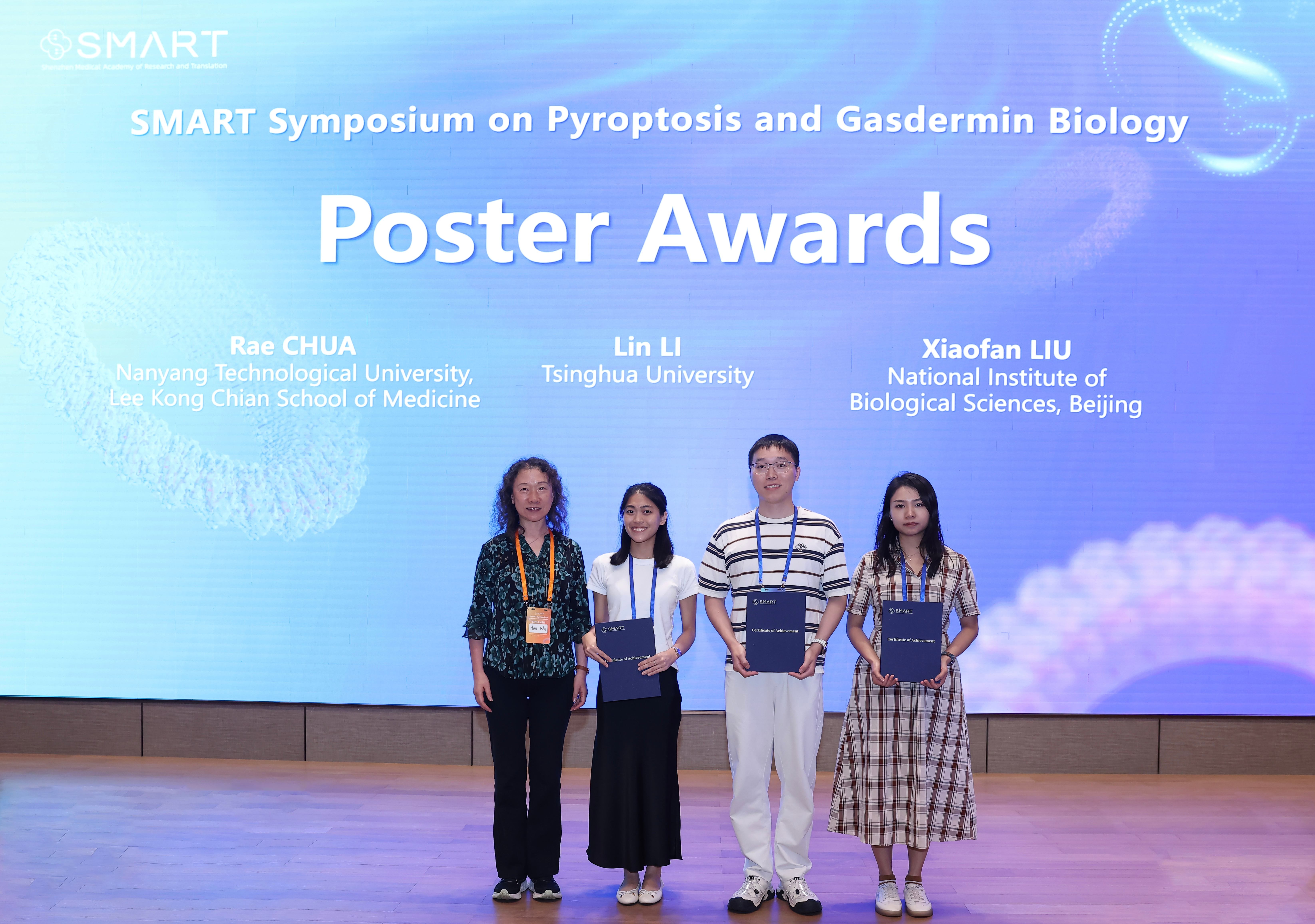
At the conclusion of the symposium, the winners of the Best Poster Award were announced. Award presenters and recipients posed for a group photo. Attendees generally agreed that the symposium provided a high-level platform for academic exchange and made a positive contribution to the field. The showcase of cutting-edge techniques and the latest research findings not only enhanced mutual understanding across research areas but also laid a solid foundation for future interdisciplinary collaboration and innovation. The insights inspired by this symposium are expected to drive continued breakthroughs at the frontiers of the field.
talent@smart.org.cn
researcher@smart.org.cn
recruitment@smart.org.cn
graduate_office@smart.org.cn
graduate_admission@smart.org.cn
otl@smart.org.cn
smartfund@smart.org.cn
pr@smart.org.cn
Subscription successful! Thank you for following SMART.