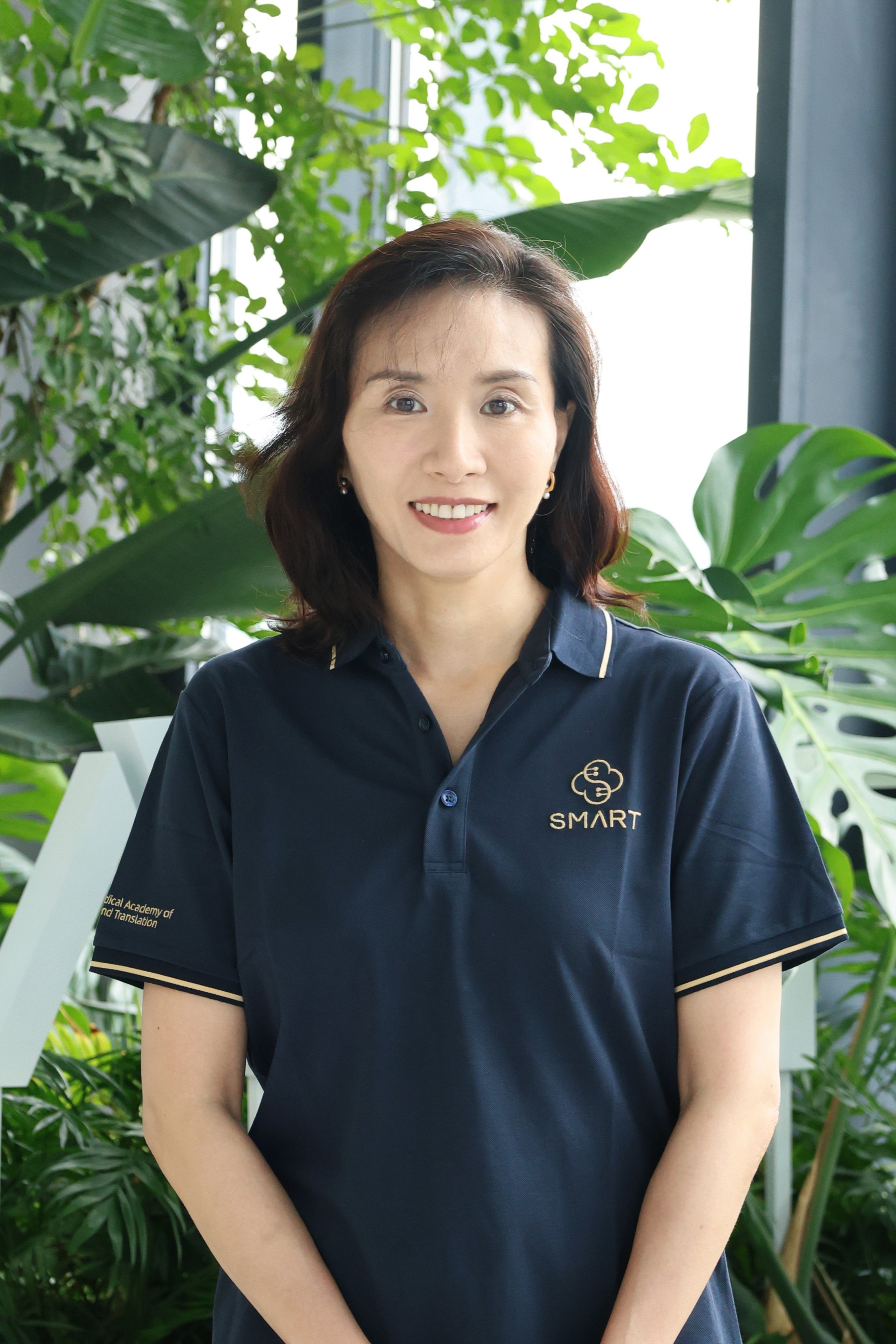
Professor Chih-Ying Su previously served as Professor and Vice Chair of the Department of Neurobiology at the University of California San Diego, and joins the Shenzhen Medical Academy of Research and Translation (SMART) as a Senior Investigator in July 2026. Professor Su received his Ph.D. in Neuroscience from Johns Hopkins University and completed postdoctoral training at Yale University. Her research has long focused on understanding how the nervous system senses and processes external information and how these processes shape animal behavior. Her work centers on olfactory information processing and neuromodulatory mechanisms, with particular emphasis on the dynamic regulation of sensory systems during early stages of information processing. Her research has been published in leading journals in neuroscience and biology, including Nature, Neuron, Nature Communications, and PNAS.
2016 Faculty Mentorship Award, Division of Biological Sciences, UCSD
2015 Ray Thomas Edwards Foundation Career Award
2015 Hellman Fellowship
2013 AChemS ECRO Fellowship, Association for Chemoreception Sciences
2006 Phi Beta Kappa Society, Johns Hopkins University
2006 Young Investigator Award, Johns Hopkins University School of Medicine
The Su lab uses the fruit fly (Drosophila) as a model system to study a central question in neuroscience: how does the nervous system efficiently extract and utilize sensory information in complex and constantly changing environments to generate appropriate behavioral responses? Our research focuses on the neural mechanisms underlying early-stage olfactory information processing and how neuromodulators dynamically alter sensory neuron physiology to influence downstream neural circuits and behavior.
This problem is particularly challenging in the olfactory system. Unlike vision, where colors can be described by wavelengths, odor molecules lack a simple and unified set of dimensions. Natural odors are typically composed of complex mixtures of multiple chemicals, making odor coding and recognition a major challenge in neuroscience. Olfaction is also one of the few sensory modalities that cannot yet be directly digitized—we can send images through smartphones, but we still cannot truly "send a smell." We therefore seek to understand how the nervous system efficiently detects, encodes, and interprets the complex odor world using limited neural resources.
We are particularly interested in why relatively simple nervous systems, such as that of the fruit fly, can nevertheless perform highly efficient and flexible information processing despite containing far fewer neurons than mammalian brains. Because subtle modulation at the sensory input stage can profoundly influence downstream neural circuits and behavior, we study "computations at the sensory input layer" to uncover fundamental principles of efficient neural processing and to provide inspiration for efficient information-processing strategies in data science and artificial intelligence.
The Su lab combines genetics, electrophysiology, calcium imaging, behavioral analysis, and electron microscopy to investigate neural mechanisms across molecular, cellular, and circuit levels.
(*corresponding author)
1. Intrinsic diversity in odor-evoked calcium rises across Drosophila olfactory neurons. Yiyi Xiao, Shiuan-Tze Wu, Renny Ng and Chih-Ying Su*. Journal of Neuroscience. 2026, 46(18), e2132252026.
2. Morphological specializations of mosquito CO2-sensing olfactory receptor neurons. Shadi Charara#, Jonathan Choy#, Kalyani Cauwenberghs, Pawel Vijayakumar, Renny Ng, Keun-Young Kim, Shih-Che Weng, Omar S Akbari, Mark H Ellisman, Scott A Rifkin and Chih-Ying Su*. Proceedings of the National Academy of Sciences of the United States of America. 2025, 122 (43), e2514666122.
3. Peripheral preprocessing in Drosophila facilitates odor classification. Palka Puri, Shiuan-Tze Wu, Chih-Ying Su, and Johnatan Aljadeff*. Proceedings of the National Academy of Sciences of the United States of America. 2024, 121(21), e2316799121.
4. Valence opponency in peripheral olfactory processing. Shiuan-Tze Wu#, Jen-Yung Chen#, Vanessa Martin, Renny Ng, Ye Zhang, Dhruv Grover, Ralph J Greenspan, Johnatan Aljadeff and Chih-Ying Su*. Proceedings of the National Academy of Sciences of the United States of America. 2022, 119(5), e2120134119.
5. Systematic morphological and morphometric analysis of identified olfactory receptor neurons in Drosophila melanogaster. Cesar Nava Gonzales#, Quintyn McKaughan#, Eric A Bushong, Kalyani Cauwenberghs, Renny Ng, Matthew Madany, Mark H Ellisman and Chih-Ying Su*. Elife. 2021, 10, e69896.
6. Amplification of Drosophila olfactory responses by a DEG/ENaC channel. Renny Ng, Secilia S Salem, Shiuan-Tze Wu, Meilin Wu, Hui-Hao Lin, Andrew K Shepherd, William J Joiner, Jing W Wang and Chih-Ying Su*. Neuron. 2019, 104(5), 947-959.
7. Asymmetric ephaptic inhibition between compartmentalized olfactory receptor neurons. Ye Zhang#, Tin Ki Tsang#, Eric A Bushong, Li-An Chu, Ann-Shyn Chiang, Mark H Ellisman, Jürgen Reingruber and Chih-Ying Su*. Nature Communications. 2019, 10(1), 1-16.
8. Hormonal modulation of pheromone detection enhances male courtship success. Hui-Hao Lin#, De-Shou Cao#, Sachin Sethi, Zheng Zeng, Jacqueline SR Chin, Tuhin Subhra Chakraborty, Andrew K Shepherd, Christine A Nguyen, Joanne Y Yew, Chih-Ying Su*, Jing W Wang*. Neuron. 2016, 90(6),1272-1285.
9. Non-synaptic inhibition between grouped neurons in an olfactory circuit. Chih-Ying Su, Karen Menuz, Johannes Reisert, John R Carlson*. Nature. 2012, 492(7427), 66-71.
10. Olfactory perception: receptors, cells, and circuits. Chih-Ying Su#, Karen Menuz#, John R Carlson*. Cell. 2009, 139(1), 45-59.
talent@smart.org.cn
researcher@smart.org.cn
recruitment@smart.org.cn
graduate_office@smart.org.cn
graduate_admission@smart.org.cn
otl@smart.org.cn
smartfund@smart.org.cn
pr@smart.org.cn
Subscription successful! Thank you for following SMART.