Sleep is an innate behavior essential for maintaining normal brain and bodily functions. Research into sleep revolves around two fundamental questions: how we sleep and why we sleep. The regulation of sleep was long attributed to a "sleep center" in the hypothalamic preoptic area. However, recent advances in neuroscience have identified novel sleep-promoting neuronal populations that are widely distributed across the brain, challenging the notion of a single sleep center. Regarding the "why" question, the adverse effects of sleep deprivation illustrate its importance: it impairs cognition function, weakens immunity, disrupts metabolism, and elevates the risk of cardiovascular and other diseases. Nevertheless, the core functional mechanisms of sleep remain unresolved, representing one of the major challenges in the life sciences. Notably, the question "Why do we sleep?" is included in Science's list of the 125 scientific questions of greatest concern, underscoring its pivotal role in neuroscience.
On September 16, 2025 (Beijing Standard Time), a review entitled "The how and why of sleep: Motor theory and catecholamine hypothesis" was published in Neuron by Junior Principal Investigator Chenyan Ma and Senior Principal Investigator Yang Dan. Yang Dan, Director of the Institute of Neuromodulation and Cognition (INC) at the Shenzhen Medical Academy of Research and Translation, served as the corresponding author, with Chenyan Ma as the first author.
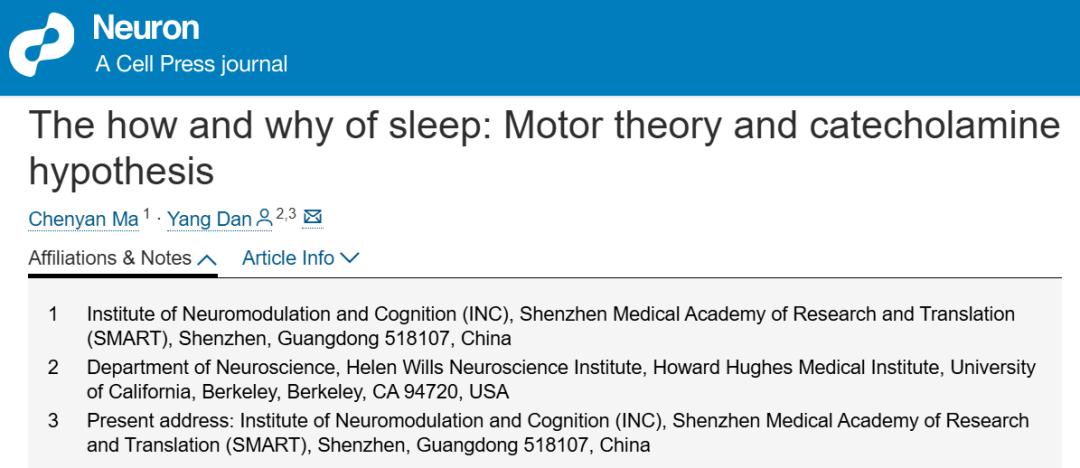
Link to full text: https://www.cell.com/neuron/fulltext/S0896-6273(25)00623-3
This review presents an integrative "motor theory" of sleep regulation addressing both "how we sleep" and "why we sleep", and for the first time introduces a "catecholamine hypothesis" to explain sleep's multifaceted biological functions. The "motor theory" is supported by extensive evidence, which proposes that the neural network controlling sleep is deeply intertwined with circuits governing somatic and autonomic functions. Sleep-control neurons not only regulate brain states but also coordinately suppress somatic and autonomic activities, thereby inducing physiological sleep. This theory neatly explains the reduced somatic and autonomic activities universally observed during sleep across animal species. The "catecholamine hypothesis" offers a mechanistic explanation for the question "why we sleep", positing that a core function of sleep is to provide a physiological window for suppressing catecholamine signaling. The modulation of this signaling constitutes a fundamental biological process mediating sleep's multifaceted benefits.
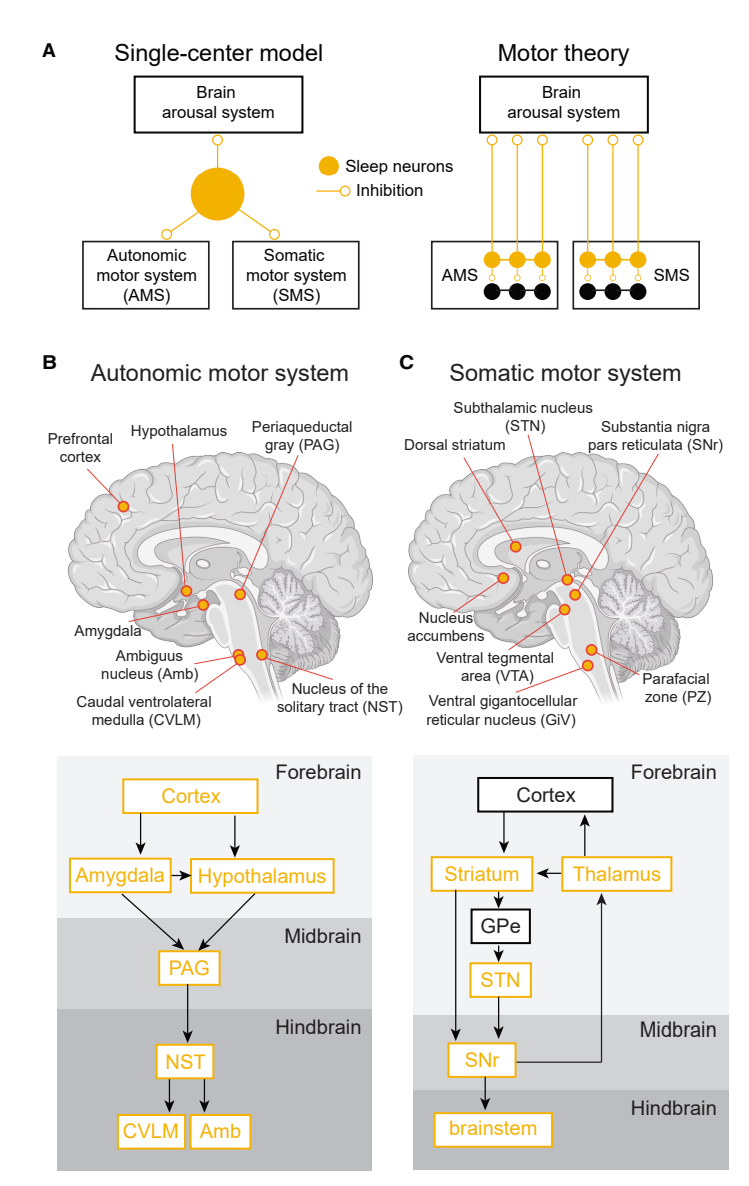
Motor theory of sleep control
In June 2025, Yang Dan joined the Shenzhen Medical Academy of Research and Translation upon returning to China and founded the Institute of Neuromodulation and Cognition. The Institute is dedicated to addressing major fundamental and clinical issues in neuroscience and conducting innovative research with truly international impact. To date, it has assembled a high-caliber research team comprising 2 Senior Principal Investigators (Yang Dan and Wei Lu), 2 Junior Principal Investigators (Chenyan Ma and Yuanyuan Yao), and over 50 multidisciplinary researchers at various career stages, forming a pioneering team poised to drive further in-depth studies.
The Institute of Neuromodulation and Cognition is now in a phase of rapid development and warmly invites outstanding talents from around world to join us as independent Principal Investigators and researchers. We offer a first-class research platform, substantial funding, an open and collaborative academic environment, and a competitive compensation package. We look forward to partnering with you to explore the frontiers of neuroscience and advance the future of human health.
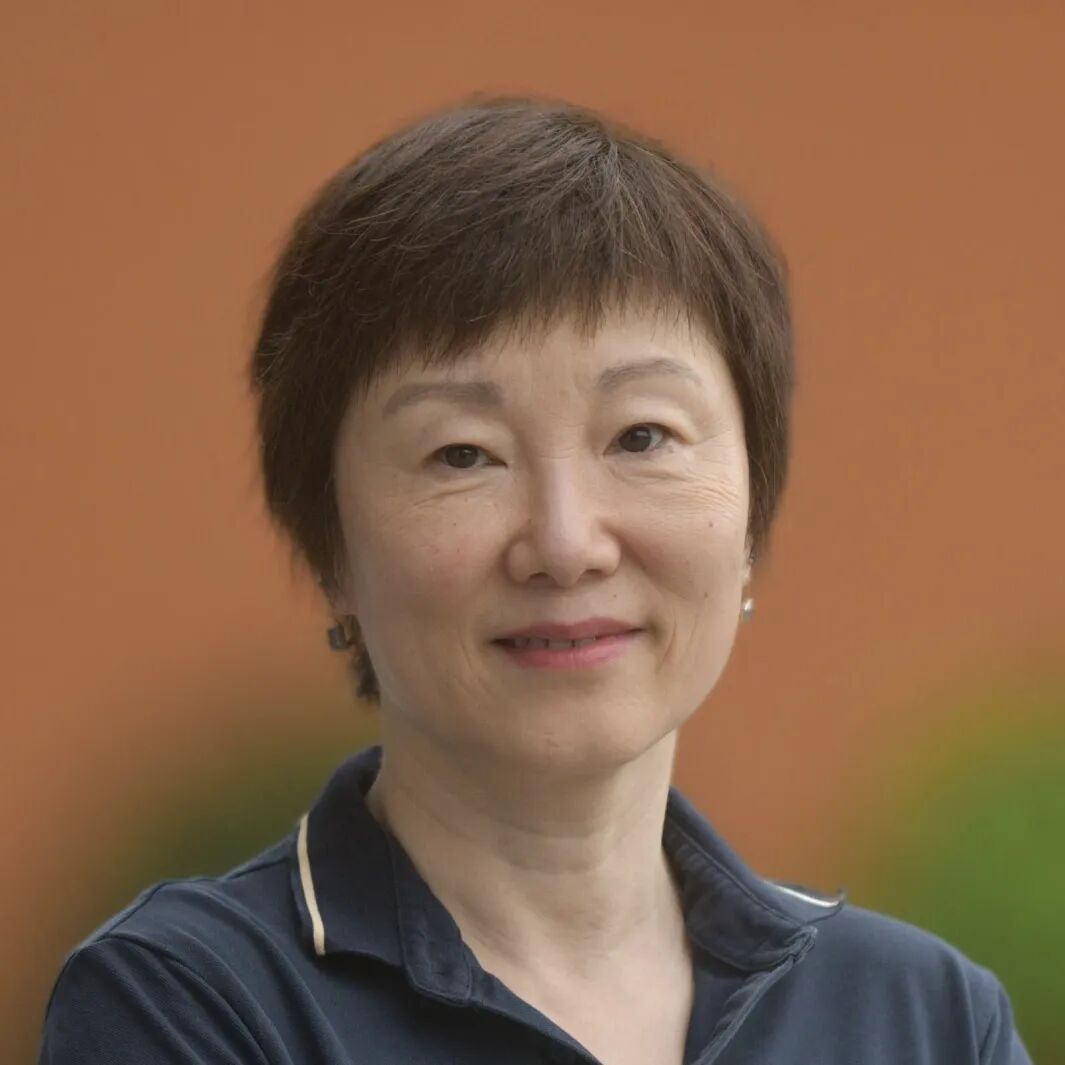
Yang Dan earned her undergraduate degree (Physics) from Peking University, followed by a PhD (Biological Sciences) from Columbia University. She subsequently conducted postdoctoral research at Rockefeller University & Harvard Medical School. Prior to returning to China, she worked as a professor at the University of California, Berkeley, and as a researcher at the Howard Hughes Medical Institute (HHMI). In June 2025, she joined the Shenzhen Medical Academy of Research and Translation as a full-time Senior Principal Investigator and Director of Institute of Neuromodulation and Cognition (INC).
Yang Dan has long been dedicated to neuroscience research, making significant contributions to understanding the neural mechanisms underlying visual perception, attention, and sleep. In recent years, she has employed a variety of advanced physiological and molecular techniques to systematically analyze the neural circuits that regulate sleep, opening a new chapter in the field of sleep research.
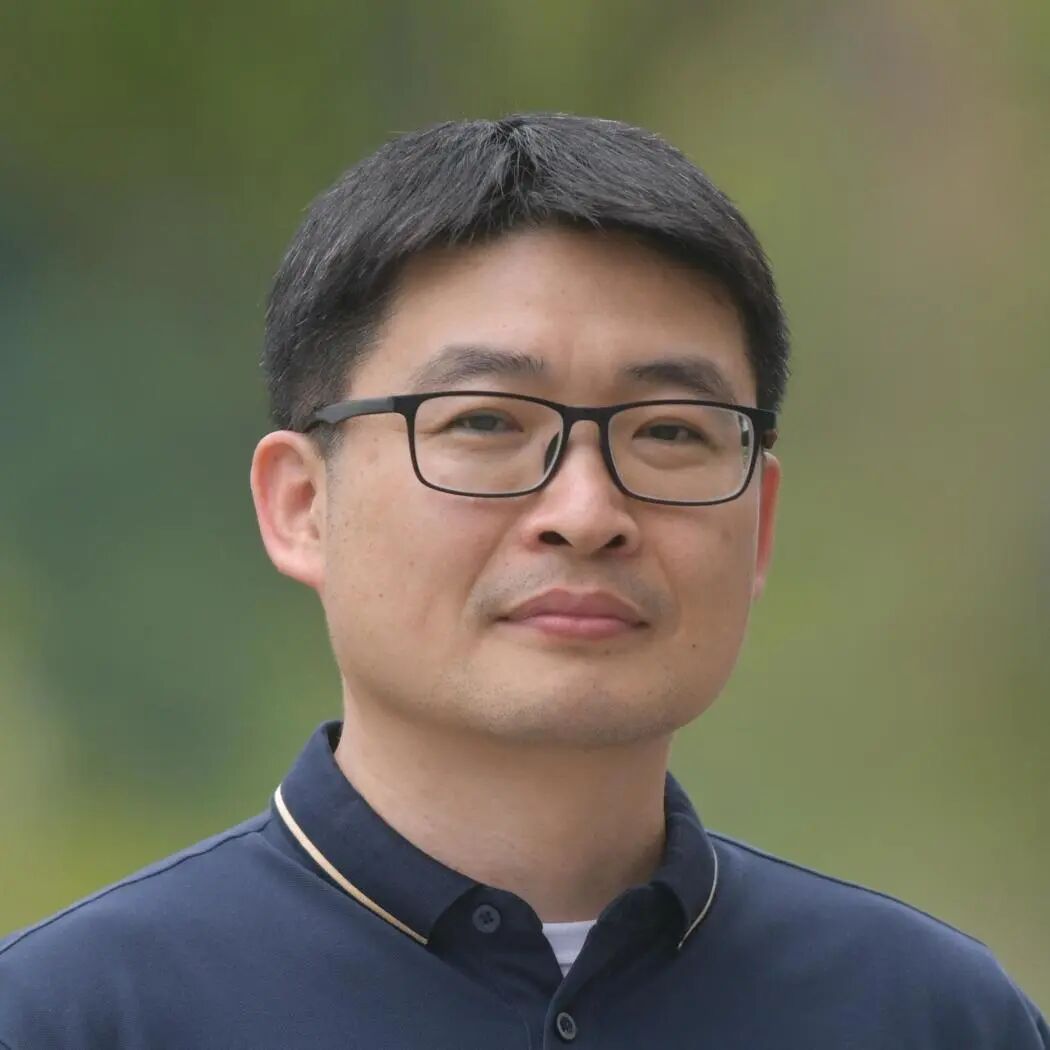
After earning his PhD from New York University, Wei Lu conducted postdoctoral research at the University of California, San Francisco, and later served as a Senior Principal Investigator at the National Institutes of Health (NIH)/National Institute of Neurological Disorders and Stroke (NINDS) before returning to China. In May 2025, he joined Shenzhen Medical Academy of Research and Translation as a full-time Senior Principal Investigator and Deputy Director of Institute of Neuromodulation and Cognition (INC).
Wei Lu has long focused on synaptic development and functional regulation, as well as the neurobiological mechanisms underlying anxiety, depression, anesthesia, and alcohol effects. He has proposed several novel prospectives on synaptic development and functional regulation, identified multiple previously unknown proteins that regulate synaptic function, and systematically revealed synaptic function and related pathological mechanisms. His work holds promise for developing new therapeutic strategies for insomnia, anxiety, depression, alcoholism, and for improving anesthetic practice. Moving forward, he aims to develop next-generation therapeutics targeting GABAA receptors for brain disorders.

Chenyan Ma earned her undergraduate degree at the College of Life Sciences, Nankai University, followed by a PhD (Neurobiology) in 2015 from University of Institute of Neuroscience, Chinese Academy of Sciences (University of Chinese Academy of Sciences). From 2015 to 2023, she conducted postdoctoral research and later served as a Research Associate at the University of California, Berkeley/Howard Hughes Medical Institute (HHMI). She joined the Shenzhen Medical Academy of Research and Translation in 2024 as a Junior Principal Investigator.
Chenyan Ma focuses on understanding the regulation and functions of sleep, with particular emphasis on the interaction between sleep and the immune system. She seeks to explain how the immune system modulates sleep, and how sleep in turn influences brain health and neuroimmune function. Her prior work include the systematic screening and validation of novel sleep-regulating neural circuits, characterization of the role of brain-resident immune cells in sleep regulation, and investigation of information transmitting mechanisms in the cerebral cortex across sleep-wake states.
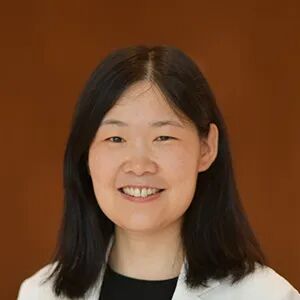
Yuanyuan Yao is a Junior Principal Investigator (since September 2023) at the Shenzhen Medical Academy of Research and Translation, where she leads an independent research group and serves as a PhD supervisor. She has been selected for the High-level Talents Program of Guangdong Province and currently leads a project supported by the National Natural Science Foundation of China. She earned her PhD (Neurobiology) in 2016 from the Institute of Neuroscience, University of Chinese Academy of Sciences. From 2016 to 2023, she conducted postdoctoral research and later served as a Research Associate at the University of California, Berkeley/Howard Hughes Medical Institute. In September 2023, she joined the Shenzhen Medical Academy of Research and Translation and established an independent research group dedicating to elucidating the neural mechanisms underlying sleep and cardiovascular regulation.
talent@smart.org.cn
researcher@smart.org.cn
recruitment@smart.org.cn
graduate_office@smart.org.cn
graduate_admission@smart.org.cn
otl@smart.org.cn
smartfund@smart.org.cn
pr@smart.org.cn