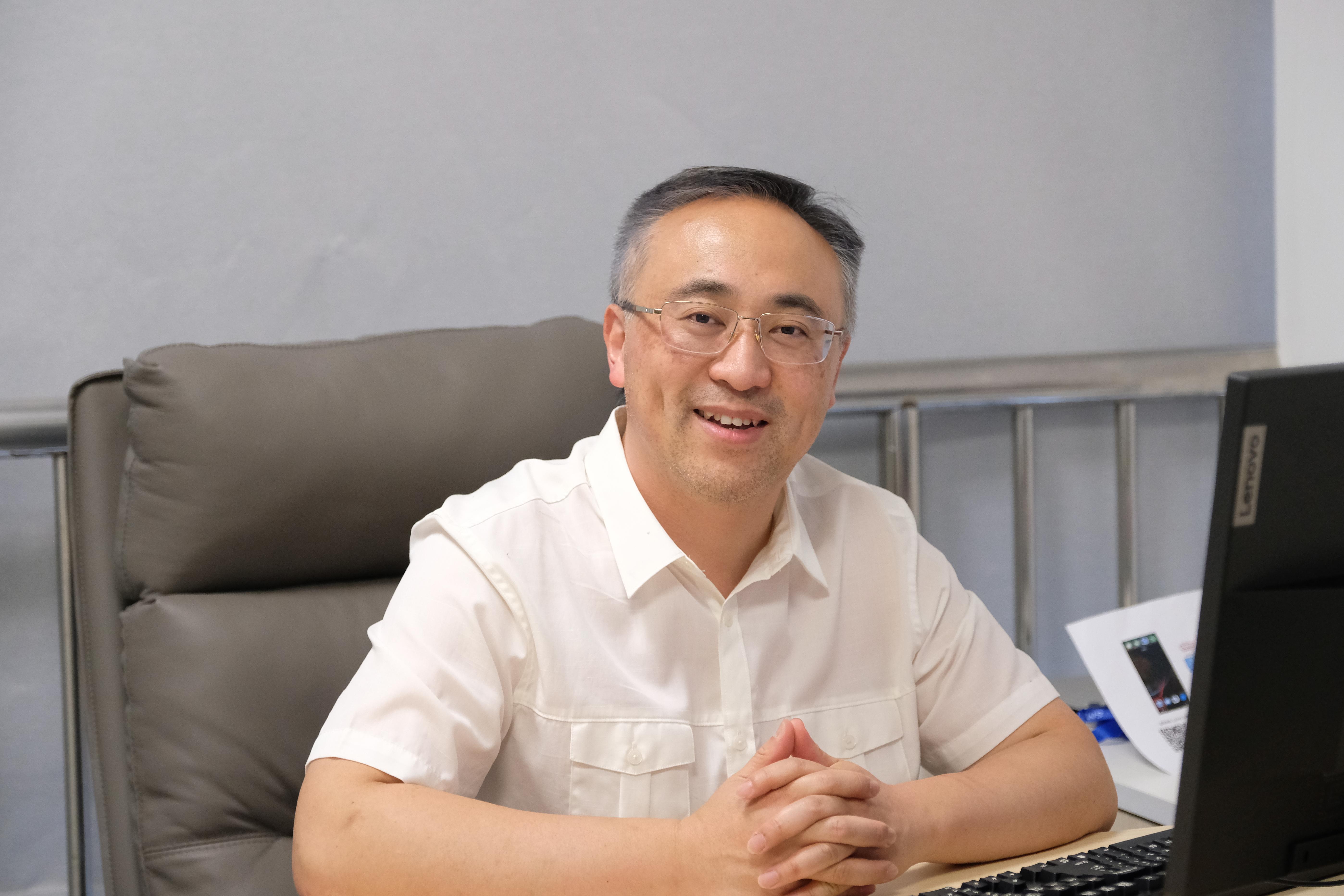
Professor Liang Shan earned his undergraduate degree in Biology at the College of Life Sciences, Nankai University, followed by a master's degree from the Department of Microbiology at the School of Life Sciences, Fudan University. He then pursued his PhD in Pharmacology and Molecular Sciences at the Johns Hopkins University School of Medicine, followed by postdoctoral training in the Department of Immunobiology at Yale University. Prior to returning to China, he was a Tenured Associate Professor in the Division of Infectious Diseases at Washington University School of Medicine in St. Louis. There, he also contributed to establishing the U.S. Midwest Developmental Center for AIDS Research and served as Director of the Department of Science and Technology. In August 2025, he joined the Shenzhen Medical Academy of Research and Translation as a full-time Senior Principal Investigator and Director of the Institute of Human Immunology.
Professor Liang Shan has long been dedicated to elucidating HIV-specific immune responses and developing antiviral strategies. His work has made breakthroughs in several key areas, including functions of the CARD8 inflammasome, elimination of HIV reservoir, and establishment of humanized mouse models. These contributions have laid a critical foundation for understanding the immunology of HIV infection and advancing therapeutic strategies toward a functional cure.
Young Scientist Award, International AIDS Conference
Young Investigator Award, Society of Chinese Virologists in America
Distinguished Faculty Award, University of Washington
Immunology Frontier Research Award
Professor Liang Shan's lab employs primary CD4+ T cells, clinical samples from people living with HIV, and humanized mouse models (including immune-reconstituted, liver-immune co-reconstituted, and NK cell-specific humanized models). By integrating molecular biology, cellular biology, structural biology, high-throughput drug screening, and clinical trial methodologies, the lab's work focuses on:
1. Mechanisms and roles of the CARD8 inflammasome in HIV infection:
The lab aims to elucidate the molecular mechanisms by which CARD8 inflammasome recognizes HIV protease and regulates CD4+T cell death and inflammation, thereby developing novel CARD8-targeting therapeutics to eliminate latent HIV reservoir. Using live-cell imaging, CRISPR editing, and single-cell sequencing, the lab can identify novel virus-host interaction networks to reveal key intervention targets for disrupting persistent HIV infection.
2. Establishment of humanized mouse models for HIV immunotherapy:
The lab aims to build genetically engineered mouse models that simulate the human immune microenvironment. These models can be used to study HIV latency, immune evasion, and the regulation of antiviral immune cells (e.g., NK cells and T cells). Through multi-omics integration and immune reconstitution techniques, the lab can elucidate the mechanisms underlying defects in host antiviral defenses, thereby accelerating the translation of precision immunotherapy strategies and upgrading the preclinical evaluation system for HIV vaccines.
1. Pal. P, Gao S, Gao H, Cella M, Wang Q, Shan L. Establishment of a Reverse Genetics System for Studying Human Immune Functions in Mice. Science Advances. 2025 Jul 11;11(28):eadu1561.
2. Wang Q, Clark KM, Tiwari R, Raju N, Tharp GK, Rogers J, Harris AR, Raveendran M, Bosinger SE, Burdo TH, Silvestri G, Shan L. The CARD8 Inflammasome Dictates HIV/SIV Pathogenesis and Disease Progression. Cell. 2024 Feb 29;187(5):1223-1237.e16.
3. Clark KM, Kim JG, Wang Q, Gao H, Presti RM, Shan L. Chemical inhibition of DPP9 sensitizes the CARD8 inflammasome in HIV-1-infected cells. Nature Chemical Biology. 2023 Apr;19(4):431-439. doi: 10.1038/s41589-022-01182-5.
4. Sungur CM, Wang Q, Ozanturk AN, Gao H, Schmitz AJ, Cella M, Yokoyama WM#, Shan L#. Human NK cells confer protection against HIV-1 infection in humanized mice. J Clin Invest. 2022 Dec15;132(24):e162694. doi: 10.1172/JCI162694. # co-corresponding author
5. Wang Q, Gao H, Clark KM, Shema Mugisha C, Davis K, Tang JP, Harlan GH, DeSelm CJ, Presti RM, Kutluay SB, Shan L. CARD8 is an inflammasome sensor for HIV-1 protease activity. Science. 2021 Mar 19;371(6535):eabe1707.
6. Song Y*, Shan L*, #, Gbyli R*, Liu W, Strowig T, Patel A, Fu X, Wang X, Xu ML, Gao Y, Qin A, Bruscia EM, Tebaldi T, Biancon G, Mamillapalli P, Urbonas D, Eynon E, Gonzalez DG, Chen J, Krause DS, Alderman J, Halene S#, Flavell RA#. Combined liver–cytokine humanization comes to the rescue of circulating human red blood cells. Science. 2021 Mar 5;371(6533):1019-1025. * co-first author. # co-corresponding author
7. Deng K, Pertea M, Rongvaux A, Wang L, Durand CM, Bhiaur G, Lai J, McHugh HL, Hao H, Zhang H, Margolick JB, Gurer C, Murphy AJ, Valenzuela DM, Yancopoulos GD, Deeks SG, Strowig T, Kumar P, Siliciano JD, Salzberg SL, Flavell RA#, Shan L#, Siliciano RF#. Broad CTL response is required to clear latent HIV-1 due to dominance of escape mutations. Nature. 2015 Jan 15;517(7534):381-5. # co-corresponding author
talent@smart.org.cn
researcher@smart.org.cn
recruitment@smart.org.cn
graduate_office@smart.org.cn
graduate_admission@smart.org.cn
otl@smart.org.cn
smartfund@smart.org.cn
pr@smart.org.cn
Subscription successful! Thank you for following SMART.