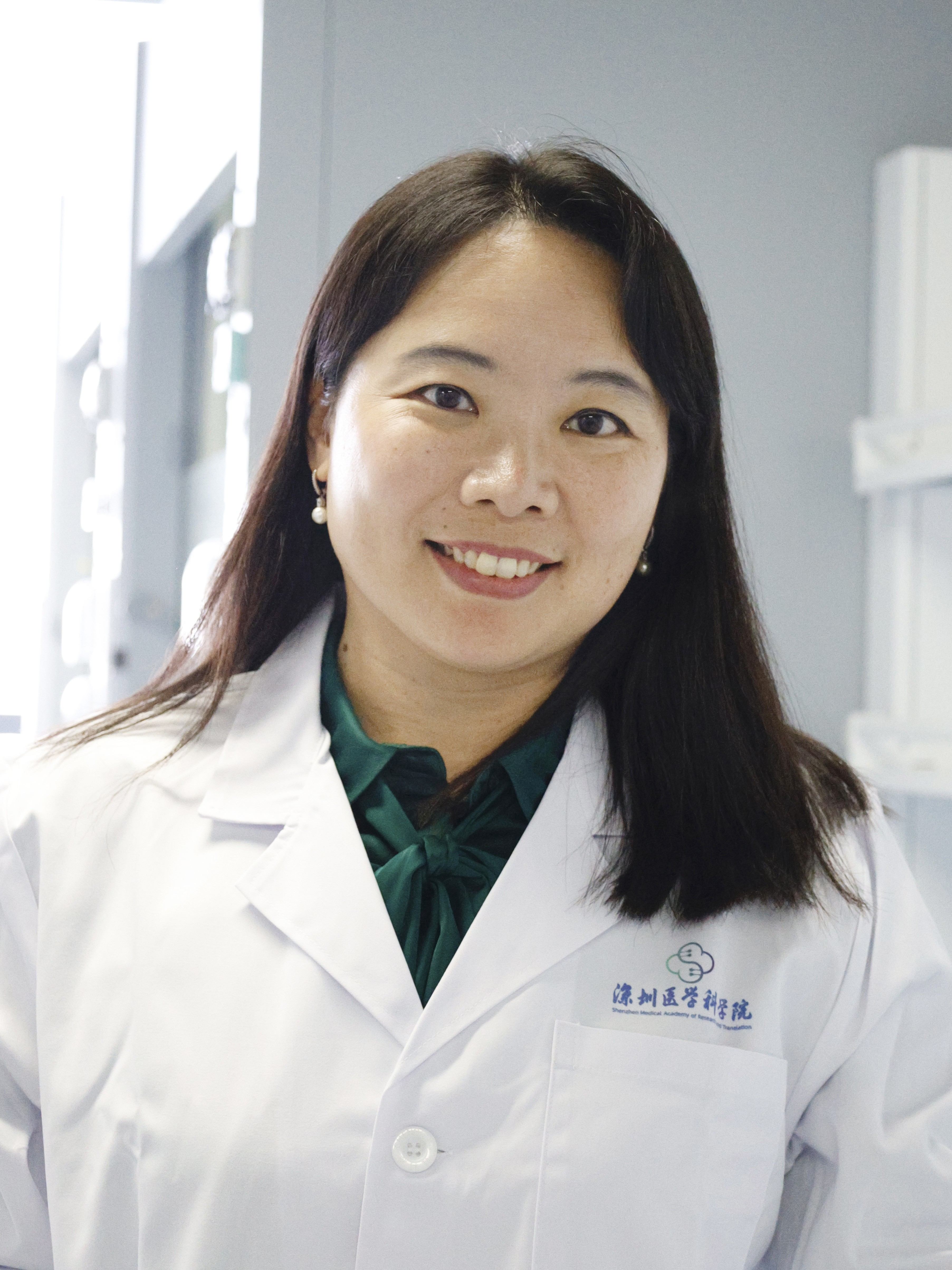
Professor Leyao Wang earned her undergraduate degree at the College of Life Sciences, Nankai University, followed by a PhD in Microbiology from Fudan University and an MPH from Johns Hopkins University. She then completed postdoctoral research at Johns Hopkins University and Yale University. Prior to returning to China, she served as an Assistant Professor at the School of Public Health and Health Sciences at the University of Massachusetts and as a Climate and Health Scholar at the U.S. National Institutes of Health (NIH). In July 2025, she joined the Shenzhen Medical Academy of Research and Translation as a full-time Principal Investigator at the Institute of Human Immunology.
Professor Leyao Wang has long focused on the human microbiome, with key contributions in the following fields: its early origins, its role in immune regulation, and its vulnerability to climate change. By employing global cohort studies and cutting-edge platforms such as organoids, her work systematically elucidates the close relationships between microbiome and human health.
2015 Recipient of the U.S. National Institutes of Health (NIH) Postdoctoral Fellowship Award
2020 Recipient of the Outstanding Mentor Award of the Global Health Research Program, Washington University in St. Louis
2024 Climate and Health Scholar, U.S. National Institutes of Health (NIH)
Professor Leyao Wang's lab focuses on the human microbiome, with the aim of elucidating the interactions among microorganisms, the host, and pathogens. By employing population cohort studies, molecular immunology techniques, and advanced bioinformatic analyses, the lab aims to clarify the critical role of the human microbiome in both infectious and chronic diseases.
1. Quinn BE, Reyes Rodríguez JA, Sam EK, Duliman J, Denn E, Lee S, Shan L, Kuti C, Nyann BI, Rosario-Matos N, and Wang L. The nasal microbiome in early infancy is primarily shaped by the maternal nasal microbiome. J Allergy Clin Immunol. 2025 May 16:S0091-6749(25)00553-6.
2. Zhang A, de Ángel Solá D, Acevedo M, Cao L, Wang L, Kim JG, Tarr P, Warner BB, Rosario N, and Wang L. Infants exposed in utero to Hurricane Maria have gut microbiomes with reduced diversity and altered metabolic capacity. mSphere. 2023 Oct 24;8(5):e0013423.
3. Kim JG, Zhang A, Rauseo AM, Goss CW, Mudd PA, O'Halloran JA, and Wang L. The nasopharyngeal and salivary microbiomes in COVID-19 patients with and without asthma, Allergy. 2022 Dec;77(12):3676-3679.
talent@smart.org.cn
researcher@smart.org.cn
recruitment@smart.org.cn
graduate_office@smart.org.cn
graduate_admission@smart.org.cn
otl@smart.org.cn
smartfund@smart.org.cn
pr@smart.org.cn
Subscription successful! Thank you for following SMART.