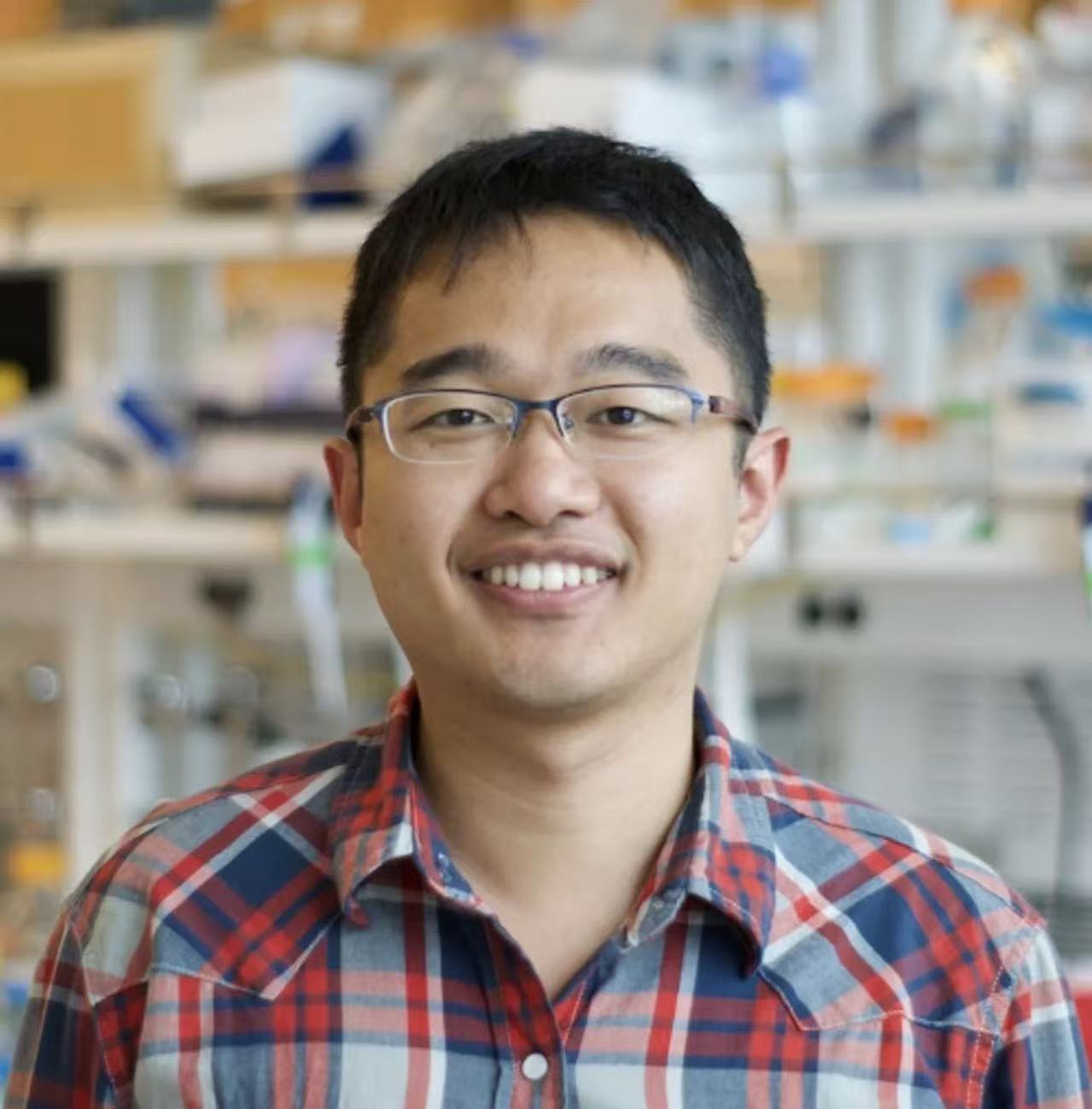
Dr. Wei Yang earned his PhD in Biology from Tsinghua University in 2019, where he studied under Professor Luhua Lai, a leading figure in computer-aided drug design and de novo protein design. From 2019 to 2025, he conducted postdoctoral research at the Institute for Protein Design, University of Washington, under the mentorship of Professor David Baker, the 2024 Nobel Prize laureate in Chemistry. Dr. Wei Yang's research focuses on the development of novel computational methods for designing protein-protein interactions and applying them to immune regulation and cancer immunotherapy.
1. Computational design of novel helical peptides
A systematic search was conducted to identify novel binding sites for helical peptides on key targets. A computational method for de novo design of D-helical peptides was developed and applied to design and validate TNFα-binding helical peptides composed of D-amino acids.
2. Computational design of immune receptor binding proteins
A concave protein scaffold was designed to address the challenge of creating de novo binders for convex protein surfaces. This enabled the successful design of highly stable, ultra-high-affinity binders targeting immune-checkpoint receptors. Additionally, cytokines with dynamic structures were designed and validated, whose affinity and bioactivity are controlled by specific cell surface receptor expression, thereby reducing systemic toxicity.
The Protein Therapeutics Design Lab integrates the latest advances in computational protein design with robust experimental platforms, establishing a closed-loop process that encompasses algorithm development, high-throughput validation, and iterative optimization. The lab's work focuses on:
(1) Developing novel design methods and validation platforms for de novo protein therapeutics, establishing a technological foundation for next-generation biologics;
(2) Applying these advanced algorithms to design high-selectivity macromolecules for cancer immunotherapy, aiming to enhance target precision and minimize systemic toxicity.
1. Yang, W., Sun, X., Zhang, C. & Lai, L. Discovery of novel helix binding sites at protein-protein interfaces. Comput. Struct. Biotechnol. J. 17, 1396–1403 (2019).
2. Yang, W. et al. Computational design and optimization of novel d-peptide TNFα inhibitors. FEBS Lett. 593, 1292–1302.
3. Yang, W. et al. Design of high-affinity binders to immune modulating receptors for cancer immunotherapy. Nat. Commun. 16, 2001 (2025).
4. Cao, L. et al. Design of protein-binding proteins from the target structure alone. Nature 605, 551–560 (2022).
5. Wang, J. et al. Scaffolding protein functional sites using deep learning. Science 377, 387–394 (2022).
talent@smart.org.cn
researcher@smart.org.cn
recruitment@smart.org.cn
graduate_office@smart.org.cn
graduate_admission@smart.org.cn
otl@smart.org.cn
smartfund@smart.org.cn
pr@smart.org.cn
Subscription successful! Thank you for following SMART.