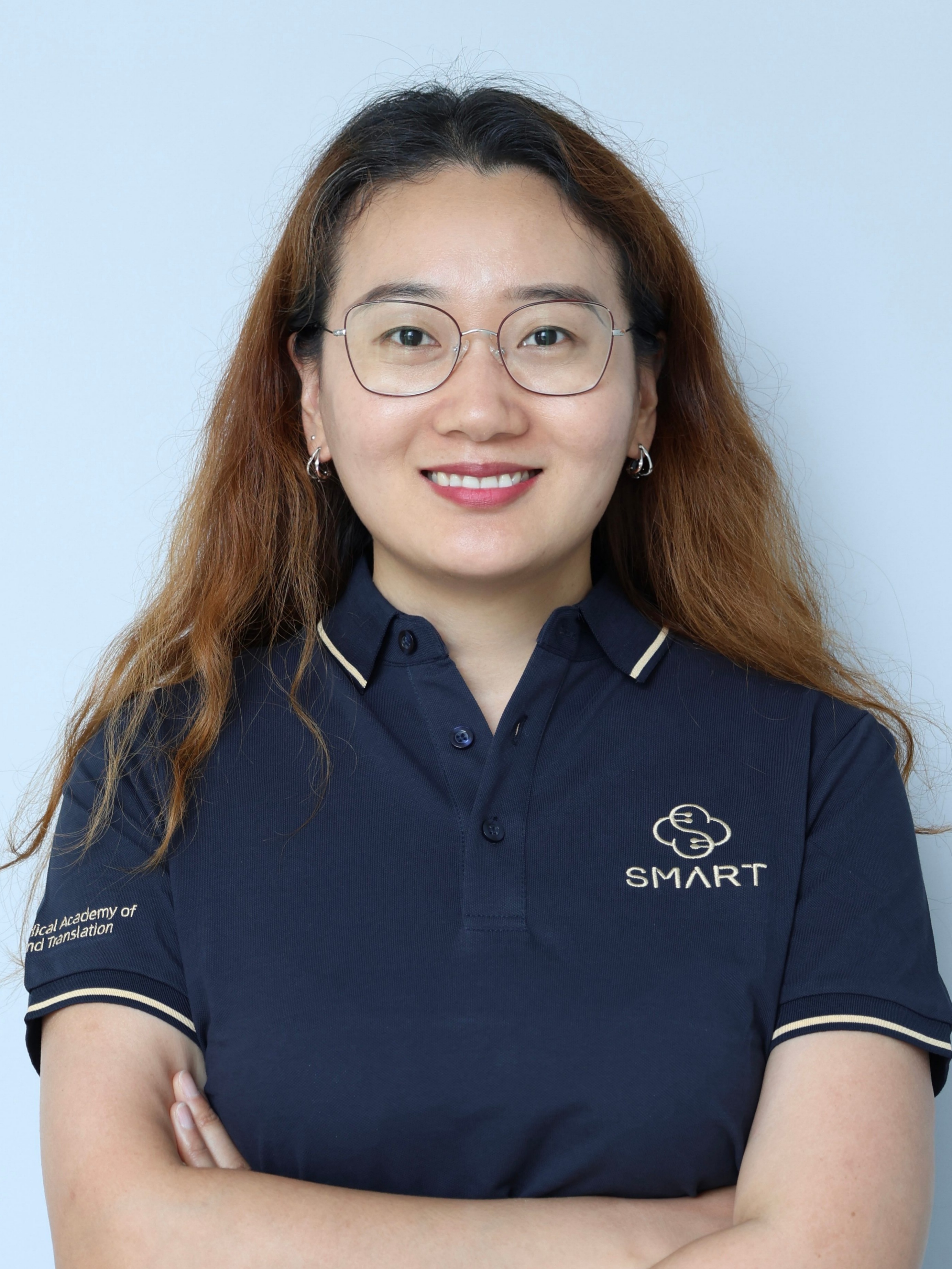
Junior Principal Investigator
Molecular cell biology and developmental biology
sundaxiao@smart.org.cn
Xinghan Chen(chenxinghan@smart.org.cn)
The development and maintenance of multicellular organisms rely on precisely organized structures spanning multiple scales, from subcellular molecular assemblies and cell-cell junctions to tissue-level homeostasis. Understanding how these hierarchically organized structures are dynamically coordinated across space and time represents a central challenge in uncovering the complexity and robustness of living systems.
Dr. Daxiao Sun develops quantitative and interdisciplinary approaches to investigate the mechanisms by which biomolecular condensates regulate cell-cell junctions, tissue development, and tissue homeostasis. Her work aims to uncover the fundamental principles governing multiscale biological assembly. She has established an integrative research framework combining bottom-up in vitro reconstitution, biophysical modeling, and tissue biology, leading to the discovery of key molecular and physical principles underlying epithelial barrier formation and maintenance.
In the future, Dr. Sun’s laboratory will further extend this interdisciplinary framework to epithelial barrier systems and cardiac systems, with the goal of building a multiscale “molecule–cell–tissue” research platform for studying disease mechanisms. Her group will focus on cross-scale structural assembly, mechano-electrical coupling, and the pathogenesis of human diseases, particularly hereditary cardiomyopathies and inflammatory bowel diseases, aiming to provide new conceptual foundations for early diagnosis and targeted therapeutic intervention.
Dr. Daxiao Sun’s research focuses on the fundamental principles governing cross scale organisation of multicellular organism, with particular emphasis on the biophysical mechanisms underlying multicellular assembly and tissue homeostasis. Her work has pioneered the understanding of biomolecular condensates as a central regulatory mechanism in cell junction assembly, tissue formation, and tissue maintenance. Using epithelial tight junctions as a model system, she has made several major contributions: (1) Discovery of a new mechanism for cell junction assembly. She demonstrated that protein surface condensation cooperates with local cytoskeletal organization to drive tight junction formation, establishing a dynamic assembly mechanism distinct from traditional static models. (2) Establishment of an interdisciplinary quantitative framework. By integrating bottom-up reconstitution, biophysical modeling, and tissue-level validation, she developed a systematic multiscale research strategy from molecules to tissues and uncovered general principles governing membrane compartmentalization and spatial organization. Bedsides, during her doctoral research, she was the first to demonstrate that liquid-like condensates mediate cargo recognition and spatial initiation of selective autophagy, challenging the conventional view that autophagy substrates are primarily solid aggregates. This work provided a new conceptual framework for understanding the role of phase separation in cellular homeostasis and degradation pathways.
2026–present, Junior Principal Investigator, Shenzhen Medical Academy of Research and Translation (SMART)
2019–2026, Postdoctoral Fellow, Max Planck Institute of Molecular Cell Biology and Genetics (MPI-CBG) and Technische Universität Dresden, Germany
2018–2019, Postdoctoral Fellow, School of Life Sciences, Tsinghua University, China
2013–2018, Ph.D. in Biology, School of Life Sciences, Tsinghua University, China
2009–2013, B.Sc. in Biotechnology, School of Life Sciences, Shandong University, China
Independence Accelerator Award, German Research Foundation (DFG), 2024
Poster Prize, Tight Junctions: from Structure and Development to Therapeutics (International Conference), 2023
Poster Prize, Cellular Mechanisms Driven by Phase Separation, EMBL International Conference, 2022
1. Hiroyuki Uechi, Daxiao Sun, Yuki Saeki, Tetsuya Hiraiwa, Alf Honigmann, Anthony A Hyman, Erina Kuranaga (2026). A conserved motif tunes Sidekick condensate dynamics to control tricellular junction recruitment during epithelial remodeling. Cell Reports 45. 10.1016/j.celrep.2026.117336.
2. Daxiao Sun# *, Xueping Zhao#, Tina Wiegand, Cecilie Martin-Lemaitre, Tom Borianne, Lennart Kleinschmidt, Stephan W Grill, Anthony A Hyman, Christoph Weber*, and Alf Honigmann* (2025). Assembly of tight junction belts by ZO1 surface condensation and local actin polymerization. Developmental Cell 60, 1234-1250.e1236. 10.1016/j.devcel.2024.12.012.
3. Xueping Zhao #, Daxiao Sun #, Giacomo Bartolucci, Anthony A Hyman, Alf Honigmann, and Christoph A Weber (2025). Theory of non-dilute surface binding and phase separation applied to membrane-binding proteins. eLife 14:RP105980 https://doi.org/10.7554/eLife.105980.1
4. Xuezhao Feng#, Daxiao Sun#*, Yanchang Li#, Jinpei Zhang#, Shiyu Liu, Dachuan Zhang, Jingxiang Zheng, Qing Xi, Haisha Liang, Wenkang Zhao, Ying Li, Mengbo Xu, Jiayu He, Tong Liu, Ayshamgul Hasim, Meisheng Ma, Ping Xu*, and Na Mi* (2023). Local membrane source gathering by p62 body drives autophagosome formation. Nat Commun 14, 7338. 10.1038/s41467-023-42829-8.
5. Zheng Shen, Daxiao Sun, Adriana Savastano, Sára Joana Varga, Maria-Sol Cima-Omori, Stefan Becker, Alf Honigmann, and Markus Zweckstetter (2023). Multivalent Tau/PSD-95 interactions arrest in vitro condensates and clusters mimicking the postsynaptic density. Nat Commun 14, 6839. 10.1038/s41467-023-42295-2.
6. Daxiao Sun, Isabel LuValle-Burke, Karina Pombo-García, and Alf Honigmann (2022). Biomolecular condensates in epithelial junctions. Curr Opin Cell Biol 77: 102089. 10.1016/j.ceb.2022.102089.
7. Xuezhao Feng, Wanqing Du, Mingrui Ding, Wenkang Zhao, Xirenayi Xirefu, Meisheng Ma, Yuhui Zhuang, Xiaoyu Fu, Jiangfeng Shen, Jinpei Zhang, Xiuying Lei, Daxiao Sun, Qing Xi, Yiliyasi Aisa, Qian Chen, Ying Li, Wenjuan Wang, Shanjin Huang, Li Yu, Pilong Li, and Na Mi (2022). Myosin 1D and the branched actin network control the condensation of p62 bodies. Cell Res 32(7): 659-669. 10.1038/s41422-022-00662-6.
8. Yukako Oda, Chisato Takahashi, Shota Harada, Shun Nakamura, Daxiao Sun, Kazumi Kiso, Yuko Urata, Hitoshi Miyachi, Yoshinori Fujiyoshi, Alf Honigmann, Seiichi Uchida, Yasushi Ishihama, and Fumiko Toyoshima (2021). Discovery of anti- inflammatory physiological peptides that promote tissue repair by reinforcing epithelial barrier formation. Science Advances 7(47). 10.1126/sciadv.abj6895.
9. Yuting Zhao, Zhongju Zou, Daxiao Sun, Yue Li, Sangita C Sinha, Li Yu, Lynda Bennett, and Beth Levine (2021). GLIPR2 is a negative regulator of autophagy and the BECN1-ATG14-containing phosphatidylinositol 3-kinase complex. Autophagy 17(10): 2891-2904. 10.1080/15548627.2020.1847798.
10. Qi Pan, Daxiao Sun, Jianfeng Xue, Jie Hao, Hansen Zhao, Xijian Lin, Li Yu, and Yan He (2021). "Real-Time Study of Protein Phase Separation with Spatiotemporal Analysis of Single-Nanoparticle Trajectories." Acs Nano 15(1): 539-549. 10.1021/acsnano.0c05486.
11. Daxiao Sun, Rongbo Wu, Pilong Li, and Li Yu (2020). Phase Separation in Regulation of Aggrephagy. Journal of Molecular Biology 432(1): 160-169. 10.1016/j.jmb.2019.06.026.
12. Daxiao Sun#, Rongbo Wu#, Jingxiang Zheng, Pilong Li, and Li Yu (2018). Polyubiquitin chain-induced p62 phase separation drives autophagic cargo segregation. Cell Res 28, 405-415. 10.1038/s41422-018-0017-7.
13. Rui Chen, Yilong Zou, Dongxue Mao, Daxiao Sun, Guanguang Gao, Jingwen Shi, Xiaoqing Liu, Chen Zhu, Mingyu Yang, Wanlu Ye, Qianqian Hao, Ruiqiang Li, and Li Yu (2014). The general amino acid control pathway regulates mTOR and autophagy during serum/glutamine starvation. J Cell Biol 206, 173-182. 10.1083/jcb.201403009.
talent@smart.org.cn
researcher@smart.org.cn
recruitment@smart.org.cn
graduate_office@smart.org.cn
graduate_admission@smart.org.cn
otl@smart.org.cn
smartfund@smart.org.cn
pr@smart.org.cn
Subscription successful! Thank you for following SMART.