November blesses Shenzhen with the year's most delightful weather. Sunlight pours over the sprawling architecture of Guangming Science City, while crisp, dry air sharpens the view, tracing the contours of distant mountains on the horizon. Inside a SMART laboratory, young graduate students watch their cultured cells under the microscope, tracking subtle changes and patterns, their focus framed by a brilliantly blue sky – a seasonal luxury in this subtropical city. In this gentle season, an innovative experiment in cultivating the next generation of scientists quietly reaches its two-year milestone at SMART.
From the moment of its conception, the SMART PhD Program – a joint doctoral training initiative, has embodied a bold declaration for the future. With the "Life Sciences + X" model at its core, SMART PhD program translates its mission of cultivating interdisciplinary scientific talents into practice by building a world-class, high-caliber, deeply interdisciplinary, and boundary-breaking doctoral program. Launched in the autumn of 2024, SMART has partnered with leading Universities in China, such as Tsinghua University and Westlake University, to train exceptional innovative talents capable of tackling major challenges in the life sciences. Under the spotlight, SMART shoulders a profound yet straightforward mission: How do we empower the world's brightest minds to roam freely across the frontiers where life science meets the unknown?
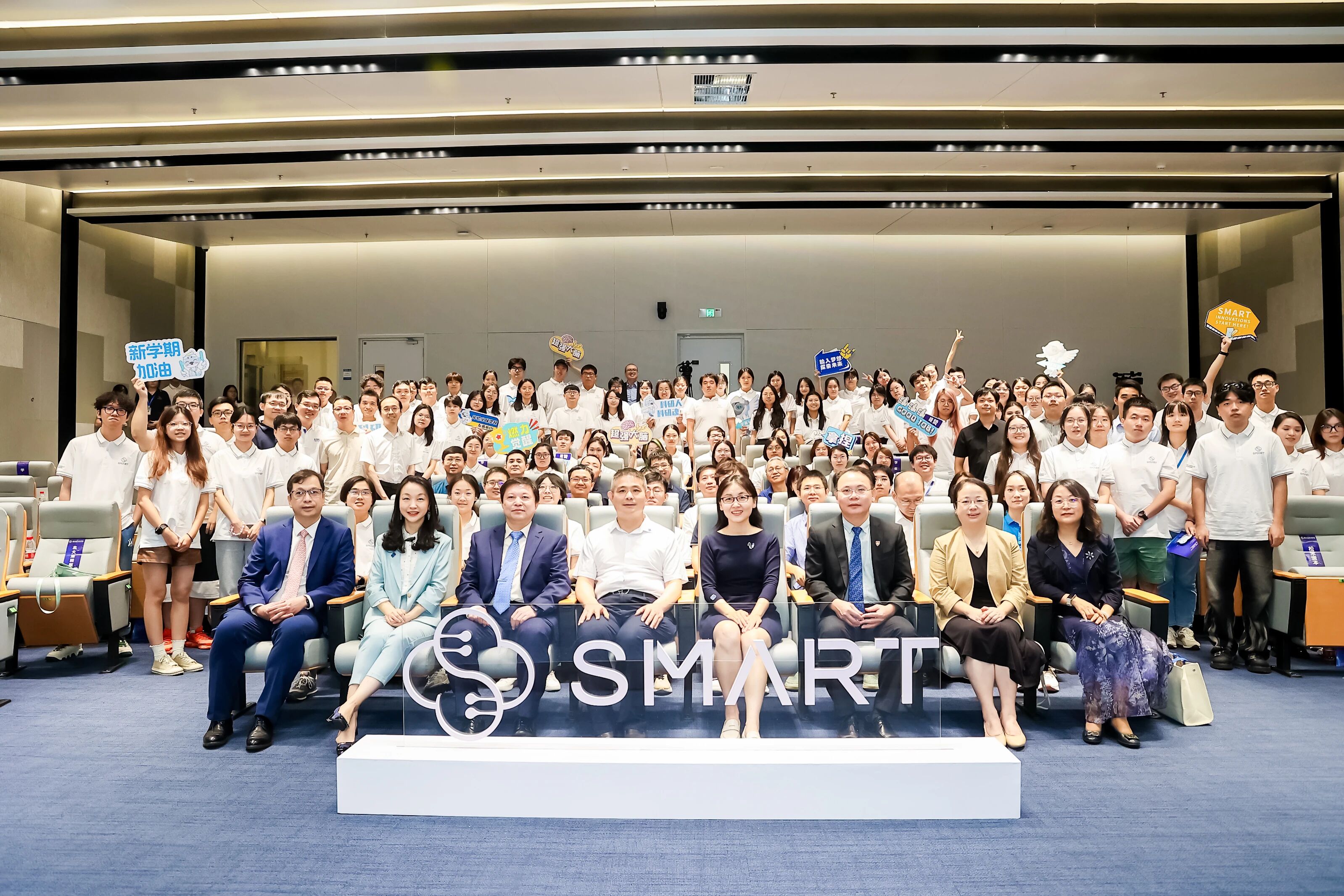
August 22, 2024: First cohort of SMART PhD students officially matriculated.
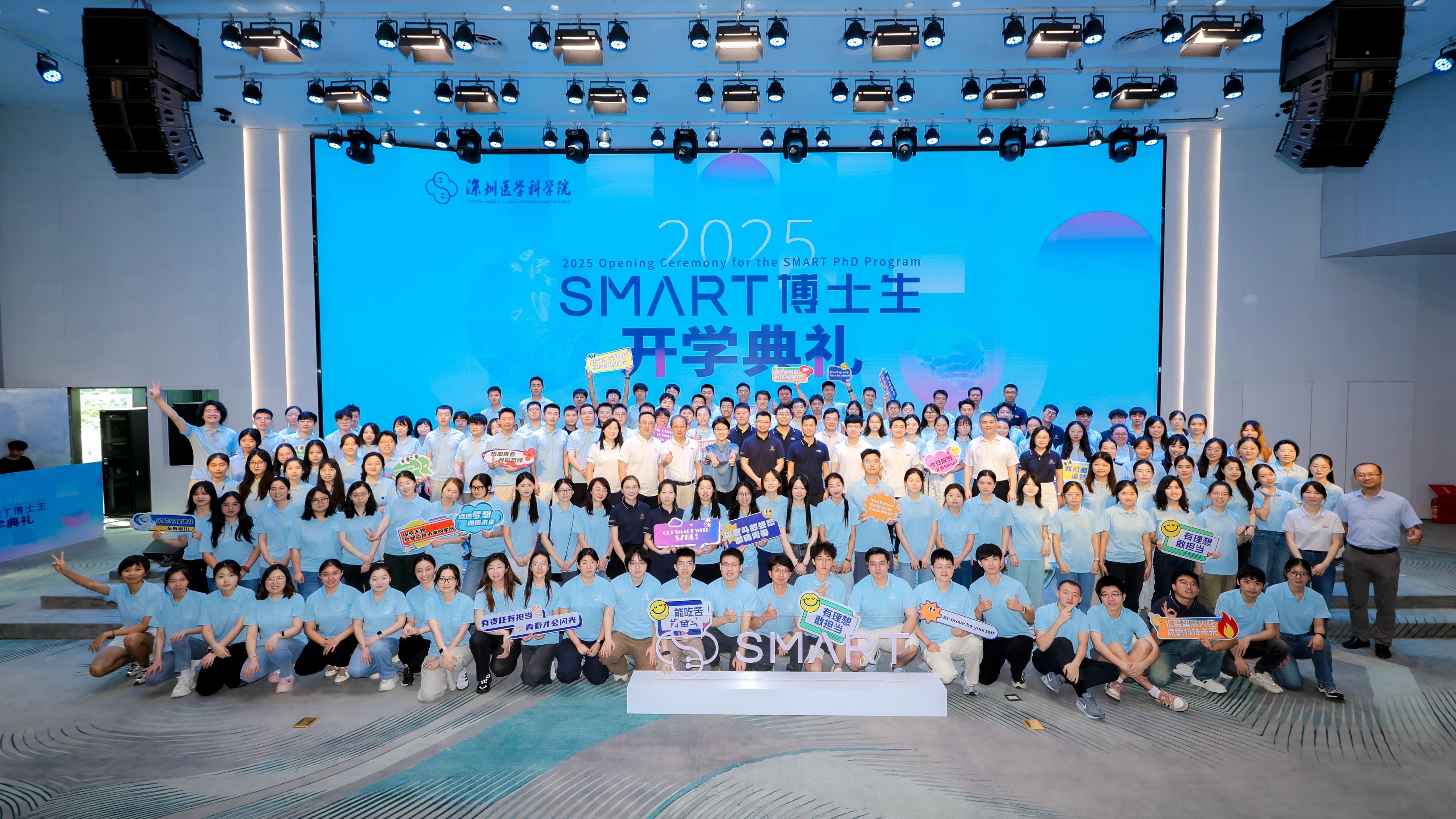
August 22, 2025: Second cohort SMART PhD students officially matriculated.
Today, what first began as a blueprint is steadily taking shape as a true "incubator of innovation". Here at SMART, traditional doctoral training models have been reimagined, and a team of passionate and visionary "educational gardeners" is now pioneering new pathways for nurturing the next generation of scientists.
Under the guidance of its Student Affairs Leadership Group and Graduate Students Committee, SMART has mobilized the resources and efforts across the academy to establish a full-cycle doctoral training system that spans from admissions and cultivation to career development of the next generation of scientists. Its year-round rolling admissions and multi-channel global outreach efforts have drawn thousands of applications worldwide, reflecting the program's growing international reputation and academic appeal. Moreover, the arrival of SMART's first cohort of international faculty and students has further diversified perspectives and invigorated conversations within the labs, enriching SMART's global character. A frequently asked question among student applicants – "How do we select a supervisor at SMART?" – finds its answer in a stellar and diverse roster of faculty mentors. Students begin their scientific voyage by first rotating through three different labs from a pool of over 70 options here at SMART, before ultimately entering a mutual selection process that pairs them with the most suitable lab and academic supervisor to commence their PhD journey formally.
The curriculum design here at SMART focused on an organic integration between rigorous scientific training and well-rounded intellectual development. While distinguished scholars lead ideological and political education modules, specialized scientific curricula – taught entirely in English – align with global standards, spanning classical biomedical domains and emerging frontiers such as synthetic biology and artificial intelligence. All courses offered here at SMART aim to equip students with a solid biological foundation and interdisciplinary perspective.
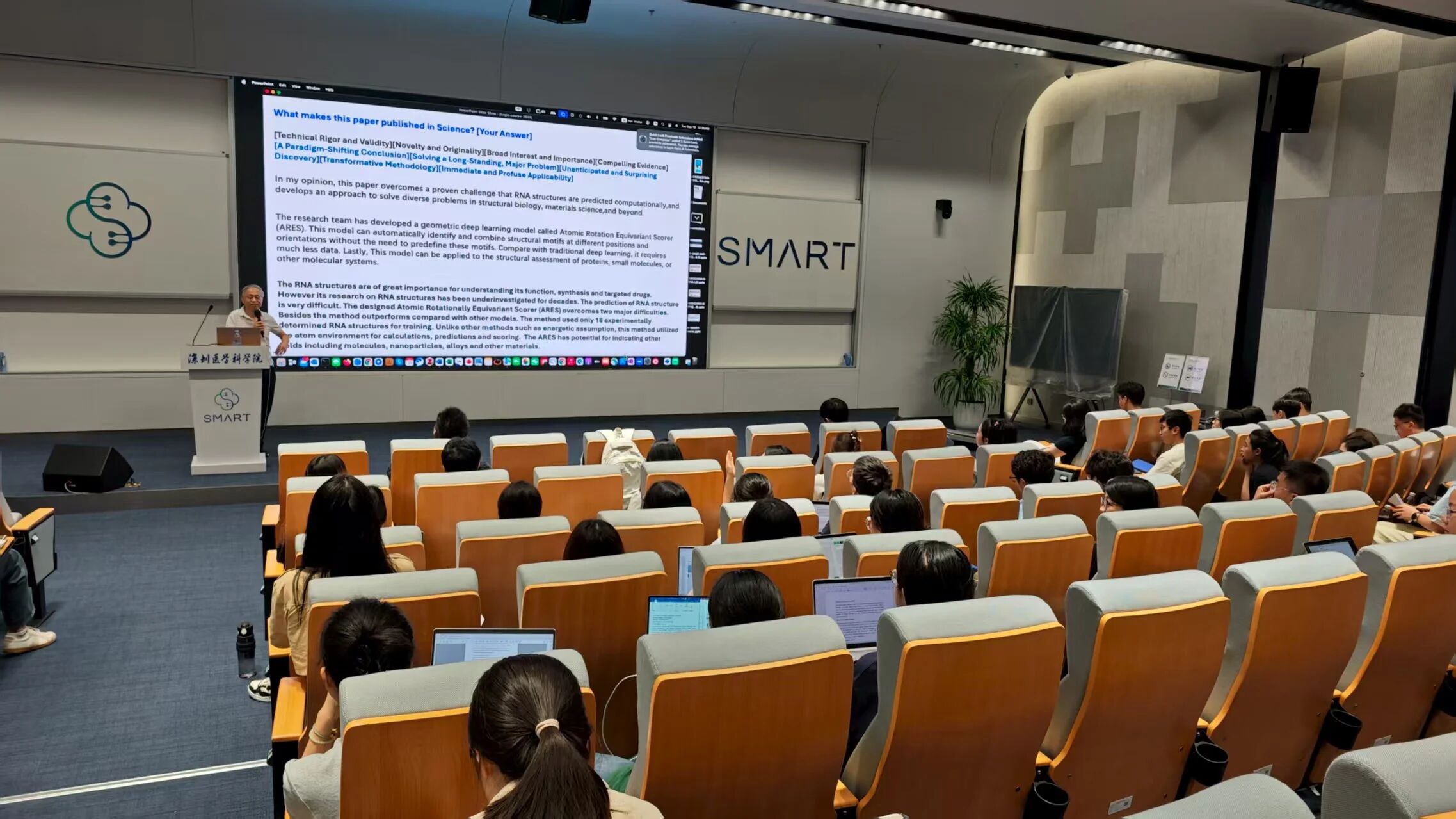
Yet the SMART PhD program's boldness to innovate lies further in its continuous exploration. Its "Life Sciences + X"framework bridges basic research with industrial translation and clinical applications, creating an end-to-end doctoral training model that immerses students in the full cycle of scientific research, clinical practice, and industrial innovation, to cultivate them into high-end, versatile, interdisciplinary, and innovative scientific talents. Effective initiatives like the "Clinical-Basic Research Dual Mentorship" have fostered in-depth dialogues between clinical needs and basic science, enabling students to learn from a unique vantage point situated between the training of both clinicians and basic scientists, building bridges between the ward and the lab to conduct scientific inquiries.
Another pioneering effort here at SMART is its "Research-Engineering Dual Mentorship," established in collaboration with the Institute of Biopharmacology and Health Engineering (iBHE) at Tsinghua Shenzhen International Graduate School (SIGS). This collaboration aims to bridge the critical gap between basic research's doctoral training and industrial needs for scientific talents. The recent cross-disciplinary "AI x Biology" initiative launched by SMART further offers a glimpse into the future, where AI meets high-quality data, accelerating biomedical discovery, and code converses with cells, potentially heralding a new scientific paradigm. In this way, the research projects for the SMART PhD students are no longer confined within the "literature-to-literature" cycle; instead, they respond directly to unmet clinical needs, industrial bottlenecks, and public health challenges. Moreover, SMART is the home to a distinguished faculty, including Prof. Zhoufeng Chen, Prof. Charles Lieber, and Prof. Yang Dan – all internationally recognized leaders whose work represents the forefront of research and scientific achievement in their fields. Equally inspiring is the vibrant cohort of early-career principal investigators here at SMART, who bring not only cutting-edge research projects but also refreshing mentorship styles, creating open and inclusive scientific culture without a single voice dominating the intellectual discourse in the labs. This "coexistence between masters and rising stars" scientific ecosystem fosters a unique academic atmosphere here at SMART – one that honors the pursuit of scientific depth while encouraging intellectual courage to explore the unknown.
In just two years, outcomes of SMART's pioneering PhD training model have begun to emerge: SMART PhD students have published in top-tier academic journals such as Nature and Nature Communications, and received awards at international conferences. But the impact goes beyond measurable achievements. Students are growing in ways that are less visible but equally significant: a student who once hesitated to speak English can now confidently engage leading scholars at international conferences, while another, new to bioinformatics, has mastered large-scale data analysis from scratch, driven by curiosity and supported by AI tools. The program also fosters a rich academic ecosystem. SMART Symposia bring global scholarship directly to students and researchers, while student-led initiatives like the Narrative Lab deepen engagement and add new layers to academic exchange. Through Comprehensive scholarships and financial aid, attentive logistical support, and the fast-tracked construction of a permanent campus, SMART has built a truly "worry-free research" environment, where students can dedicate to discovery.
Yet deeper challenges remain: How can a novel training paradigm sustain both its quality and effectiveness over the long term? How can bold experimentation thrive alongside with unwavering academic rigor? Here at SMART, we understand fully that what we need to respond to is not only how to train better scientists for the future, but how to cultivate versatile talents capable of confronting the complex challenges of humanity's future. As SMART celebrates its second anniversary this golden autumn, this innovative experiment continues. Moving forward, SMART will deepen its interdisciplinary training model, refine its globally aligned curricula and academic standards, and continue to foster an ecosystem where curiosity thrives, risks are embraced, and emerging leaders are empowered.
talent@smart.org.cn
researcher@smart.org.cn
recruitment@smart.org.cn
graduate_office@smart.org.cn
graduate_admission@smart.org.cn
otl@smart.org.cn
smartfund@smart.org.cn
pr@smart.org.cn
Subscription successful! Thank you for following SMART.