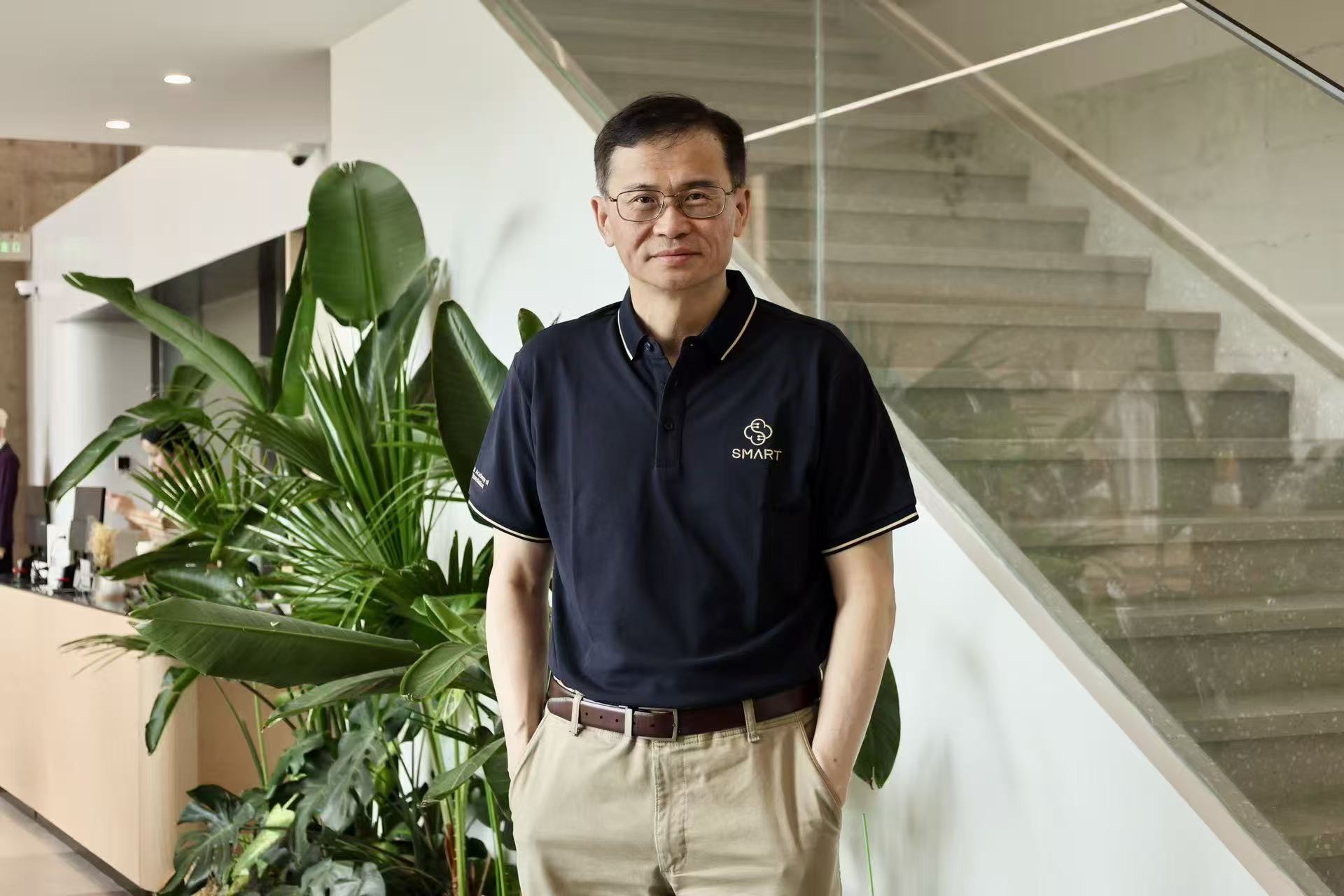
个人简介
许献忠(Shawn Xu)博士曾任美国密歇根大学伯纳德・W・阿格拉诺夫生命科学讲席教授。他于2000 年从美国约翰·霍普金斯大学获得博士学位,在美国加州理工学院完成神经科学与遗传学方向的博士后研究后, 于2005 年加入美国密歇根大学生命科学研究所和生理学系任助理教授,2010年升任终身副教授,2014年升任终身正教授并工作至2026年。2026年加入深圳医学科学院(SMART)生物构造与互作研究所(IBABI),任资深研究员。
许献忠(Shawn Xu)是感知生物学领域的知名学者,带领课题组以线虫(C. elegans)和小鼠为研究模型,深入探索了动物感知并处理温度、压力、光、声音、气味、味道等感觉信号的分子细胞机制,首次证实线虫除触觉、味觉和嗅觉外,还具备视觉、听觉、本体觉,即其具备全部六种主要感觉模态,充分确立了线虫作为研究感知生物学理想遗传模型的地位。在此基础上,课题组通过经典遗传学手段在线虫中筛选和鉴定出多个新型感知受体,比如新型光感受器LITE-1、新型冷感受体GLR-3/GluK2、新型碱性感受体TMC-1/mTMC3、机械敏感性离子通道TRP-4/TRPN1,并解析了其信号传导机制;在小鼠模型中证实了部分受体分子及信号通路的功能保守性。此外,他们还深入揭示了多条关键神经环路处理感觉信号以调节动物行为和药物依赖性的具体作用及机制。课题组的研究还表明,除了影响大脑功能和行为之外,温度和气味等感觉信号也能够调节衰老和寿命等其他生理过程,并阐明了其背后的遗传与神经机制。这些研究拓展并深化了我们对感觉信号调控大脑功能、行为以及衰老过程的理解。
主要奖项与荣誉
2017 Elected Fellow, AAAS (American Association for the Advancement of Science)
2009 Young Investigator Award, Chinese Biological Investigators Society(美国华人生物学家协会)
2007 Pew Scholar
2006 Sloan Fellow
2001 Helen Hay Whitney Postdoctoral Fellowship
2000 Harold M. Weintraub Graduate Student Award
课题组研究方向
课题组聚焦感知生物学,致力于解析生命体感知外部环境(外感受)与内部身体状态(内感受)的关键受体分子、生理过程及相关调控机制。外感受涵盖对外界温度、光线、声音、气味、压力等信号的感知,是我们连接世界、适应环境并做出行为决策的关键生理基础,帮助我们回答一个最基本的问题:“我身处何处?环境如何?”内感受则不仅包括内脏痛等感觉,还涉及呼吸频率、体温、口渴、饥饿、疲劳等身体状态的感知,是我们感知自我、产生情绪和维持生命的重要生理过程,帮助我们回答另一个基本问题:“我自身感觉怎么样?” 此外,生物感知还对代谢、衰老等关键生命过程发挥决定性调控作用。生物感知功能异常,既是耳鸣、耳聋、色盲、视力损伤等经典感觉障碍的直接病因,也作为核心症状广泛出现在神经退行性疾病、慢性疼痛、糖尿病、心血管疾病等多种重大疾病中。因此,从分子 — 细胞 — 环路多层次阐明生物感知的过程与机制,对于发现新型疾病治疗靶点、解析疾病机理具有重要意义。
未来,课题组将继续依托线虫(C. elegans)和小鼠模型,重点推进以下三方面工作:
一是筛选新型外感受与内感受感知受体,解析其信号传导机制与结构功能关系;
二是从分子、细胞和环路水平解码感觉信号调控脑功能、行为、代谢、衰老等生理过程的作用机制;
三是靶向感知受体开发与筛选小分子创新药物,助力前沿科学发现向突破性疗法的有效转化。
代表文章(*通讯作者)
1. Cai, W., Zheng, Q., Zhang, W., Hor, C.C., Pan, T., Fatima, M., Dong, X., Duan, B.*, and Xu, X.Z.S*. (2024) The kainate receptor GluK2 mediates cold sensing in mice. Nature Neuroscience 27, 679-88 (cover story)
2. Zhang, X., Liu, J., Pan, T., Ward, A., Liu, J., and Xu, X.Z.S*. (2022) A cilia-independent function of BBSome mediated by DLK-MAPK signaling in C. elegans photosensation. Developmental Cell 57, 1545–1557 (cover story)
3. Iliff, A.J., Wang, C., Ronan, E.A., Hake, A.E., Guo, Y., Li, X., Zhang, X., Zheng, M., Liu, J., Grosh, K., Duncan, R.K., Xu, X.Z.S*. (2021) The nematode C. elegans senses airborne sound. Neuron 109, 3633-46
4. Zhang, B., Jun, H., Wu, J., Liu, J*., and Xu, X.Z.S*. (2021) Olfactory perception of food abundance regulates dietary restriction-mediated longevity via a brain-to-gut signal. Nature Aging 1, 255–68
5. Gong, J., Liu, J., Ronan, E.A., He, F., Cai, W., Fatima, M, Zhang, W., Lee, H., Li, Z., Kim, G.H., Pipe, K.P., Duan, B., Liu, J*., and Xu, X.Z.S*. (2019) A cold-sensing receptor encoded by a glutamate receptor gene. Cell 178, 1375-86
6. Gong, J., Yuan, Y., Ward, A., Kang, L., Zhang, B., Wu, Z., Peng, J., Feng, Z., Liu, J*., and Xu, X.Z.S*. (2016) The C. elegans taste receptor homolog LITE-1 is a photoreceptor. Cell 167, 1252-63.
7. Wang, X., Li, G., Liu, J., Liu, J., and Xu, X.Z.S*. (2016) TMC-1 mediates alkaline sensation in C. elegans via nociceptive neurons. Neuron 91, 146-54
8. Li, Z., Liu, J., Zheng, M., and Xu, X.Z.S*. (2014) Encoding of both analog- and digital-like behavioral outputs by one C. elegans interneuron. Cell 159, 751-765. (cover story)
9. Liu, J., Zhang, B., Feng, Z., Liu, J., Hsu, A.L., and Xu, X.Z.S*. (2013) Functional aging in the nervous system contributes to age-dependent motor activity decline in C. elegans. Cell Metabolism 18, 392-402. (cover story)
10. Xiao, R., Zhang, B., Dong, Y., Gong, J., Xu, T., Liu, J., and Xu, X.Z.S*. (2013) A genetic program promotes C. elegans longevity at cold temperatures via a thermosensitive TRP channel. Cell 152, 806-817
11. Piggott, B.J., Liu, J., Feng, Z., Wescott, S.A., and Xu, X.Z.S*. (2011) The neural circuits and synaptic mechanisms underlying motor initiation in C. elegans. Cell 147, 922-933
12. Kang, L., Gao, J., Schafer, W.R., Xie, Z., and Xu, X.Z.S*. (2010) C. elegans TRP family protein TRP-4 is a pore-forming subunit of a native mechanosensory transduction channel. Neuron 67, 381-391.
13. Liu, J., Ward, A., Gao, J., Dong, Y., Nishio, N., Inada, H., Kang, L., Yu, Y., Ma, D., Xu, T., Mori, I., Xie, Z., and Xu, X.Z.S*. (2010) C. elegans phototransduction requires a G protein-dependent cGMP pathway and a taste receptor homolog. Nature Neuroscience 13, 715-722
14. Ward, A., Liu, J., Feng, Z., and Xu, X.Z.S*. (2008) Light-sensitive neurons and channels mediate phototaxis in C. elegans. Nature Neuroscience 11, 916-922.
15. Feng, Z., Li, W., Ward, A., Piggott, B.J., Larkspur, E., Sternberg, P.W., and Xu, X.Z.S*. (2006) A C. elegans model of nicotine-dependent behavior: regulation by TRP-family channels. Cell 127, 621-633
16. Li, W., Feng, Z., Sternberg, P.W., and Xu, X.Z.S*. (2006) A C. elegans stretch receptor neuron revealed by a mechanosensitive TRP channel homologue. Nature 440, 684-687.
Professor Shawn Xu joins Shenzhen Medical Academy of Research and Translation (SMART)
Profile
Prior to joining SMART, Dr. Shawn Xu was Bernard W. Agranoff Collegiate Professor at the University of Michigan. Dr. Xu obtained his Ph.D. from the Johns Hopkins University in 2000. After completing his postdoctoral training in Neuroscience & Genetics at the California Institute of Technology, Dr. Xu joined the Life Sciences Institute and Dept. of Molecular & Integrative Physiology at the University of Michigan as an assistant professor in 2005. Dr. Xu was promoted to associate professor with tenure in 2010 and full professor with tenure in 2014. In 2026, Dr. Xu joined the Institute of Bio-Architecture and Bio-Interactions (IBABI) of SMART as a senior investigator.
Dr. Xu is a leading scientist in sensory biology. Using C. elegans and mouse as models, the Xu lab has made a series of contributions to our understanding of how animals detect and process sensory signals such as temperature, light, sound, touch, smell, and taste. The group was the first to demonstrate that, in addition to touch, taste, and smell, the nematode C. elegans also possesses the senses of light, airborne sound, and proprioception. These discoveries established that C. elegans has all six primary sensory modalities, fully establishing this animal as a powerful genetic model for the study of sensory biology.
Building on these foundational discoveries, the Xu lab has identified and characterized multiple novel sensory receptors, including the photoreceptor LITE-1, the cold receptor GLR-3/GluK2, the alkaline receptor TMC-1/mTMC3, and the mechanosensitive channel TRP-4/TRPN1, among others. Importantly, they have demonstrated the functional conservation of some of these sensory receptors and their downstream signaling pathways using mouse models. Furthermore, they have characterized how neural circuits process sensory signals to regulate behavior and drug dependence. Moreover, their work has revealed that beyond brain function and behavior, sensory signals such as temperature and smell also regulate other vital physiological processes such as aging and longevity, and has elucidated the underlying genetic and neural mechanisms. These studies have expanded and deepened our understanding of how sensory cues regulate brain function, behavior, and aging.
Major Awards & Honors
2017 Elected Fellow, AAAS (American Association for the Advancement of Science)
2009 Young Investigator Award, Chinese Biological Investigators Society (CIBS)
2007 Pew Scholar
2006 Sloan Fellow
2001 Helen Hay Whitney Postdoctoral Fellowship
2000 Harold M. Weintraub Graduate Student Award
Research Directions
The Xu lab focuses on sensory biology, aiming to understand how we sense both the external environment (exteroception) and internal world (interoception) using C. elegans and mouse models. Exteroception allows us to sense external cues such as temperature, light, sound, odorants, tastants, and touch, serving as a key physiological foundation for connecting us to the external world, adapting to our surroundings, and guiding behavioral decisions. Interoception, on the other hand, not only underlies visceral pain and related sensations but also regulates physiological states such as respiratory rate, core body temperature, thirst, hunger, and fatigue. It is a vital physiological process that controls self-perception, emotional experience, and the maintenance of life. Furthermore, exteroception and interoception play key roles in regulating other vital physiological processes such as metabolism and aging. Dysfunction in exteroception/interoception is not only a direct cause of classical sensory disorders such as tinnitus, deafness, color blindness, and visual impairment, but also represents a core symptom widely associated with various human diseases, including neurodegenerative diseases, chronic pain, diabetes, and cardiovascular diseases. As such, elucidating the molecular, cellular and circuit mechanisms of exteroception and interoception is of great significance for developing novel therapeutics. Moving forward, Professor Xu’s group will continue to leverage C. elegans and mouse models to: i) identify novel sensory receptors detecting various exteroceptive and interoceptive signals and characterize their physiological functions and structure-function relationships; ii) elucidate how sensory signals regulate brain function, behavior, metabolism, and aging at the molecular, cellular, and circuit levels; and iii) screen for small molecules targeting sensory receptors to translate fundamental knowledge into novel therapeutics.
Representative Publications
(*corresponding author)
1. Cai, W., Zheng, Q., Zhang, W., Hor, C.C., Pan, T., Fatima, M., Dong, X., Duan, B.*, and Xu, X.Z.S*. (2024) The kainate receptor GluK2 mediates cold sensing in mice. Nature Neuroscience 27, 679-88 (cover story)
2. Zhang, X., Liu, J., Pan, T., Ward, A., Liu, J., and Xu, X.Z.S*. (2022) A cilia-independent function of BBSome mediated by DLK-MAPK signaling in C. elegans photosensation. Developmental Cell 57, 1545–1557 (cover story)
3. Iliff, A.J., Wang, C., Ronan, E.A., Hake, A.E., Guo, Y., Li, X., Zhang, X., Zheng, M., Liu, J., Grosh, K., Duncan, R.K., Xu, X.Z.S*. (2021) The nematode C. elegans senses airborne sound. Neuron 109, 3633-46
4. Zhang, B., Jun, H., Wu, J., Liu, J*., and Xu, X.Z.S*. (2021) Olfactory perception of food abundance regulates dietary restriction-mediated longevity via a brain-to-gut signal. Nature Aging 1, 255–68
5. Gong, J., Liu, J., Ronan, E.A., He, F., Cai, W., Fatima, M, Zhang, W., Lee, H., Li, Z., Kim, G.H., Pipe, K.P., Duan, B., Liu, J*., and Xu, X.Z.S*. (2019) A cold-sensing receptor encoded by a glutamate receptor gene. Cell 178, 1375-86
6. Gong, J., Yuan, Y., Ward, A., Kang, L., Zhang, B., Wu, Z., Peng, J., Feng, Z., Liu, J*., and Xu, X.Z.S*. (2016) The C. elegans taste receptor homolog LITE-1 is a photoreceptor. Cell 167, 1252-63.
7. Wang, X., Li, G., Liu, J., Liu, J., and Xu, X.Z.S*. (2016) TMC-1 mediates alkaline sensation in C. elegans via nociceptive neurons. Neuron 91, 146-54
8. Li, Z., Liu, J., Zheng, M., and Xu, X.Z.S*. (2014) Encoding of both analog- and digital-like behavioral outputs by one C. elegans interneuron. Cell 159, 751-765. (cover story)
9. Liu, J., Zhang, B., Feng, Z., Liu, J., Hsu, A.L., and Xu, X.Z.S*. (2013) Functional aging in the nervous system contributes to age-dependent motor activity decline in C. elegans. Cell Metabolism 18, 392-402. (cover story)
10. Xiao, R., Zhang, B., Dong, Y., Gong, J., Xu, T., Liu, J., and Xu, X.Z.S*. (2013) A genetic program promotes C. elegans longevity at cold temperatures via a thermosensitive TRP channel. Cell 152, 806-817
11. Piggott, B.J., Liu, J., Feng, Z., Wescott, S.A., and Xu, X.Z.S*. (2011) The neural circuits and synaptic mechanisms underlying motor initiation in C. elegans. Cell 147, 922-933
12. Kang, L., Gao, J., Schafer, W.R., Xie, Z., and Xu, X.Z.S*. (2010) C. elegans TRP family protein TRP-4 is a pore-forming subunit of a native mechanosensory transduction channel. Neuron 67, 381-391.
13. Liu, J., Ward, A., Gao, J., Dong, Y., Nishio, N., Inada, H., Kang, L., Yu, Y., Ma, D., Xu, T., Mori, I., Xie, Z., and Xu, X.Z.S*. (2010) C. elegans phototransduction requires a G protein-dependent cGMP pathway and a taste receptor homolog. Nature Neuroscience 13, 715-722
14. Ward, A., Liu, J., Feng, Z., and Xu, X.Z.S*. (2008) Light-sensitive neurons and channels mediate phototaxis in C. elegans. Nature Neuroscience 11, 916-922.
15. Feng, Z., Li, W., Ward, A., Piggott, B.J., Larkspur, E., Sternberg, P.W., and Xu, X.Z.S*. (2006) A C. elegans model of nicotine-dependent behavior: regulation by TRP-family channels. Cell 127, 621-633
16. Li, W., Feng, Z., Sternberg, P.W., and Xu, X.Z.S*. (2006) A C. elegans stretch receptor neuron revealed by a mechanosensitive TRP channel homologue. Nature 440, 684-687.