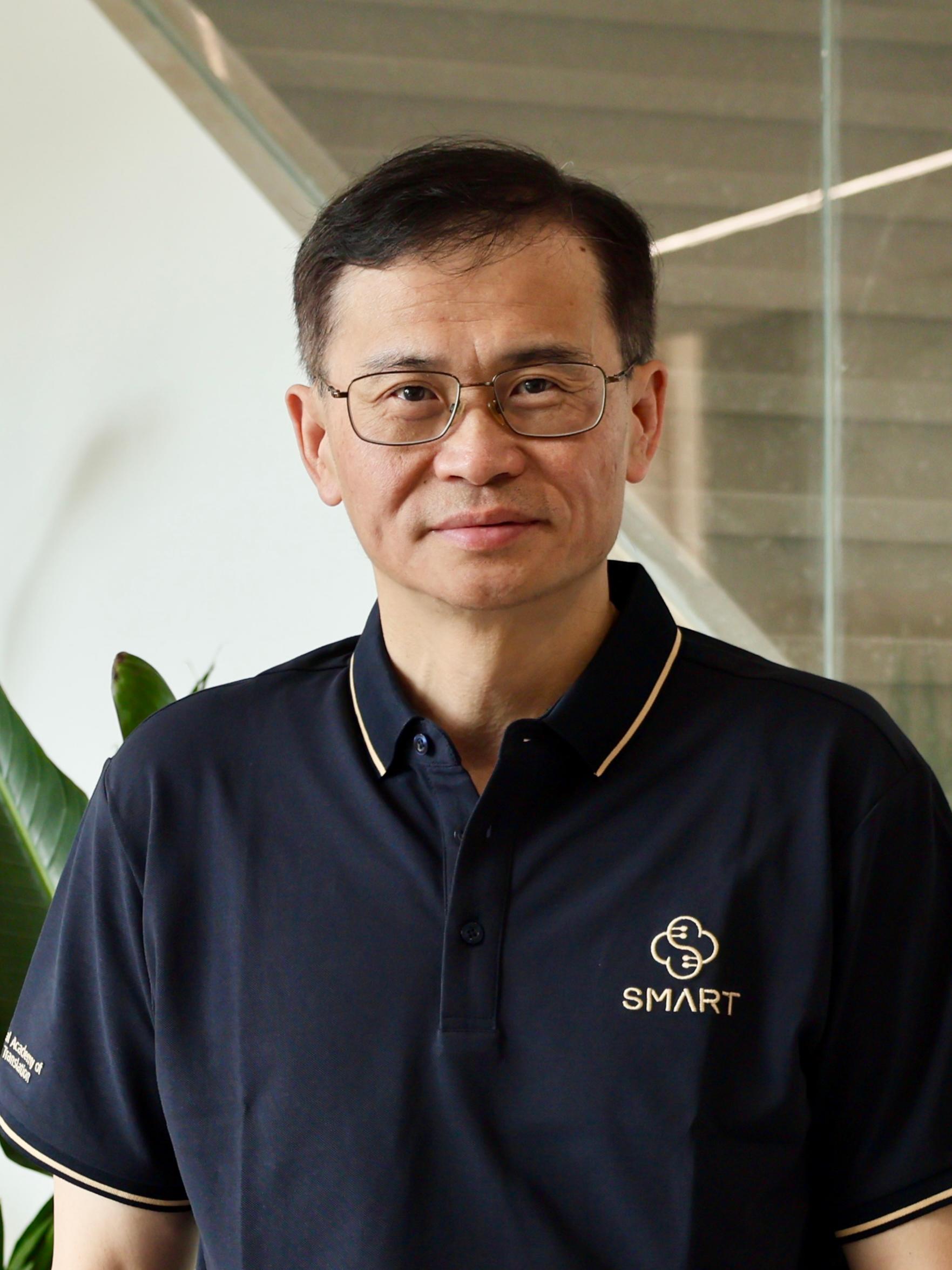
Senior Principal Investigator
Sensory biology
shawnxu@smart.org.cn
Shutong Du (dushutong@smart.org.cn)
The Shawn Xu lab focuses on sensory biology, aiming to understand how we sense both the external environment (exteroception) and internal world (interoception) using C. elegans and mouse models. Exteroception allows us to sense external cues such as temperature, light, sound, odorants, tastants, and touch, serving as a key physiological foundation for connecting us to the external world, adapting to our surroundings, and guiding behavioral decisions. Interoception, on the other hand, not only underlies visceral pain and related sensations but also regulates physiological states such as respiratory rate, core body temperature, thirst, hunger, and fatigue. It is a vital physiological process that controls self-perception, emotional experience, and the maintenance of life. Furthermore, exteroception and interoception play key roles in regulating other vital physiological processes such as metabolism and aging. Dysfunction in exteroception/interoception is not only a direct cause of classical sensory disorders such as tinnitus, deafness, color blindness, and visual impairment, but also represents a core symptom widely associated with various human diseases, including neurodegenerative diseases, chronic pain, diabetes, and cardiovascular diseases. As such, elucidating the molecular, cellular and circuit mechanisms of exteroception and interoception is of great significance for developing novel therapeutics. Moving forward, Professor Xu’s group will continue to leverage C. elegans and mouse models to: i) identify novel sensory receptors detecting various exteroceptive and interoceptive signals and characterize their physiological functions and structure-function relationships; ii) elucidate how sensory signals regulate brain function, behavior, metabolism, and aging at the molecular, cellular, and circuit levels; and iii) screen for small molecules targeting sensory receptors to translate fundamental knowledge into novel therapeutics.
Professor Shawn Xu is a leading scientist in sensory biology. Using C. elegans and mouse as models, the Shawn Xu lab has made a series of contributions to our understanding of how animals detect and process sensory signals such as temperature, light, sound, touch, smell, and taste. The group was the first to demonstrate that, in addition to touch, taste, and smell, the nematode C. elegans also possesses the senses of light, airborne sound, and proprioception. These discoveries established that C. elegans has all six primary sensory modalities, fully establishing this animal as a powerful genetic model for the study of sensory biology.
Building on these foundational discoveries, the Shawn Xu lab has identified multiple novel sensory receptors, including the photoreceptor LITE-1, the cold receptor GLR-3/GluK2, the alkaline receptor TMC-1/mTMC3, and the mechanosensitive channel TRP-4/TRPN1, among others. Importantly, they have demonstrated the functional conservation of some of these sensory receptors and their downstream signaling pathways using mouse models. Furthermore, they have characterized how neural circuits process sensory signals to regulate behavior and drug dependence. Moreover, their work has revealed that beyond brain function and behavior, sensory signals such as temperature and smell also regulate other vital physiological processes such as aging and longevity, and has elucidated the underlying genetic and neural mechanisms. These studies have expanded and deepened our understanding of how sensory cues regulate brain function, behavior, and aging.
2026–present Senior Principal Investigator, Shenzhen Medical Academy of Research and Translation (SMART).
2012–2026 Bernard W. Agranoff Collegiate Professor, Life Sciences Institute, University of Michigan.
2014–2026 Professor (with tenure), Life Sciences Institute and Dept. of Molecular & Integrative Physiology, University of Michigan.
2010–2014 Associate Professor (with tenure), Life Sciences Institute and Dept. of Molecular & Integrative Physiology, University of Michigan.
2005–2010 Assistant Professor, Life Sciences Institute and Dept. of Molecular & Integrative Physiology, University of Michigan.
2001–2005 Postdoctoral Fellow, California Institute of Technology
2000 Ph.D. Johns Hopkins University
1994 M.S. Wuhan University
1991 B.S. Wuhan University
2017 Elected Fellow, AAAS (American Association for the Advancement of Science)
2013 NIH EUREKA Grant Award
2011 Basic Science Research Award, University of Michigan Medical School
2007 Pew Scholar
2006 Sloan Fellow
2009 Young Investigator Award, Chinese Biological Investigators Society (CIBS)
2001 Helen Hay Whitney Postdoctoral Fellowship
2000 Michael Shanoff Young Investigator Award, Johns Hopkins University
2000 Harold M. Weintraub Graduate Student Award
*corresponding author
1.Cai, W., Zheng, Q., Zhang, W., Hor, C.C., Pan, T., Fatima, M., Dong, X., Duan, B*., and Xu,X.Z.S*. (2024) The kainate receptor GluK2 mediates cold sensing in mice. Nature Neuroscience 27, 679-88 (cover story) PDF
2. Zhang, X., Liu, J., Pan, T., Ward, A., Liu, J., and Xu,X.Z.S*. (2022) A cilia-independent function of BBSome mediated by DLK-MAPK signaling in C. elegans photosensation. Developmental Cell 57, 1545–1557 (cover story) PDF
3. Iliff, A.J., Wang, C., Ronan, E.A., Hake, A.E., Guo, Y., Li, X., Zhang, X., Zheng, M., Liu, J., Grosh, K., Duncan, R.K., Xu,X.Z.S*. (2021) The nematode C. elegans senses airborne sound. Neuron 109, 3633-46 PDF
4. Zhang, B., Jun, H., Wu, J., Liu, J*., and Xu,X.Z.S*. (2021) Olfactory perception of food abundance regulates dietary restriction-mediated longevity via a brain-to-gut signal. Nature Aging 1, 255–68 PDF
5. Gong, J., Liu, J., Ronan, E.A., He, F., Cai, W., Fatima, M, Zhang, W., Lee, H., Li, Z., Kim, G.H., Pipe, K.P., Duan, B., Liu, J*., and Xu,X.Z.S*. (2019) A cold-sensing receptor encoded by a glutamate receptor gene. Cell 178, 1375-86 PDF
6. Gong, J., Yuan, Y., Ward, A., Kang, L., Zhang, B., Wu, Z., Peng, J., Feng, Z., Liu, J*., and Xu,X.Z.S*. (2016) The C. elegans taste receptor homolog LITE-1 is a photoreceptor. Cell 167, 1252-63. PDF
7. Wang, X., Li, G., Liu, J., Liu, J., and Xu,X.Z.S*. (2016) TMC-1 mediates alkaline sensation in C. elegans via nociceptive neurons. Neuron 91, 146-54 PDF
8. Li, Z., Liu, J., Zheng, M., and Xu,X.Z.S*. (2014) Encoding of both analog- and digital-like behavioral outputs by one C. elegans interneuron. Cell 159, 751-765. (cover story) PDF
9. Liu, J., Zhang, B., Feng, Z., Liu, J., Hsu, A.L., and Xu,X.Z.S*. (2013) Functional aging in the nervous system contributes to age-dependent motor activity decline in C. elegans. Cell Metabolism 18, 392-402. (cover story) PDF
10. Xiao, R., Zhang, B., Dong, Y., Gong, J., Xu, T., Liu, J., and Xu,X.Z.S*. (2013) A genetic program promotes C. elegans longevity at cold temperatures via a thermosensitive TRP channel. Cell 152, 806-817 PDF
11. Piggott, B.J., Liu, J., Feng, Z., Wescott, S.A., and Xu,X.Z.S*. (2011) The neural circuits and synaptic mechanisms underlying motor initiation in C. elegans. Cell 147, 922-933 PDF
12. Kang, L., Gao, J., Schafer, W.R., Xie, Z., and Xu,X.Z.S*. (2010) C. elegans TRP family protein TRP-4 is a pore-forming subunit of a native mechanosensory transduction channel. Neuron 67, 381-391. PDF
13. Liu, J., Ward, A., Gao, J., Dong, Y., Nishio, N., Inada, H., Kang, L., Yu, Y., Ma., D., Xu, T., Mori, I., Xie, Z., and Xu,X.Z.S*. (2010) C. elegans phototransduction requires a G protein-dependent cGMP pathway and a taste receptor homolog. Nature Neuroscience 13, 715-722 PDF
14. Ward, A., Liu, J., Feng, Z., and Xu,X.Z.S*. (2008) Light-sensitive neurons and channels mediate phototaxis in C. elegans. Nature Neuroscience 11, 916-922. PDF
15. Feng, Z., Li, W., Ward, A., Piggott, B.J., Larkspur, E., Sternberg, P.W., and Xu,X.Z.S*. (2006) A C. elegans model of nicotine-dependent behavior: regulation by TRP-family channels. Cell 127, 621-633 PDF
16. Li, W., Feng, Z., Sternberg, P.W., and Xu,X.Z.S*. (2006) A C. elegans stretch receptor neuron revealed by a mechanosensitive TRP channel homologue. Nature 440, 684-687. PDF
See full publication list at: My NCBI Collection 66385705 - PubMed.
talent@smart.org.cn
researcher@smart.org.cn
recruitment@smart.org.cn
graduate_office@smart.org.cn
graduate_admission@smart.org.cn
otl@smart.org.cn
smartfund@smart.org.cn
pr@smart.org.cn
Subscription successful! Thank you for following SMART.