Sleep is a highly conservative innate behavior essential for health and survival, supporting various cognitive and physiological processes such as memory consolidation, emotional processing, waste clearance, and metabolic regulation. It also interacts bidirectionally with the immune system: sleep loss leads to immune system dysregulation and ultimately death, whereas immune challenges trigger increased sleep, which in turn promotes functional recovery and survival during sickness or injury. However, the mechanisms by which the immune system regulates sleep remain unclear. On December 11, 2025 (Beijing Standard Time), Yang Dan (Senior Principal Investigator) and Yuanyuan Yao (Junior Principal Investigator) from Institute of Neuromodulation and Cognition (INC) at Shenzhen Medical Academy of Research and Translation published a paper entitled "Brainstem circuit for sickness-induced sleep" in Science Advances as co-corresponding authors.
This study identifies the nucleus of the solitary tract–parabrachial nucleus–locus coeruleus (NST-PB-LC) circuit through which peripheral immune activation promotes sleep. Using activity-dependent genetic labeling and chemogenetic manipulation, lipopolysaccharide (LPS)-activated NST neurons and their projection target, the PB, can promote nonrapid eye movement sleep. Furthermore, fluorescence-based GRAB sensors for several wake-promoting neuromodulators reveal that LPS, or direct activations of LPS-responsive NST/PB neurons, markedly suppresses evoked norepinephrine released from the LC. These results demonstrate a neural circuit for sickness-induced nonrapid eye movement sleep: peripheral immune challenge activates the NST-PB pathway, which promotes sleep by regulating norepinephrine release from the LC.
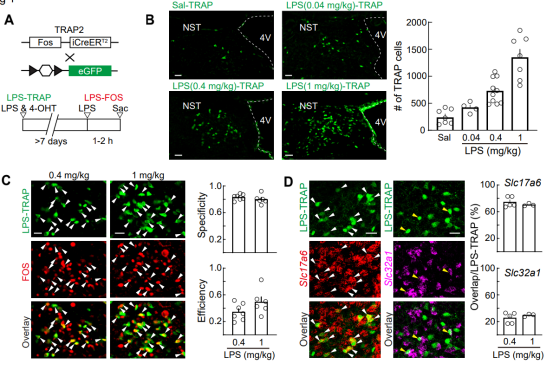
Fig. 1 NST neuron activation in response to peripheral immunity challenge by LPS
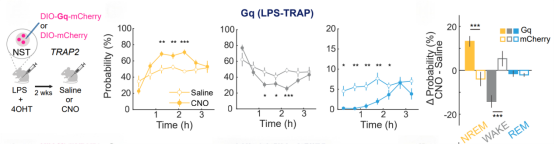
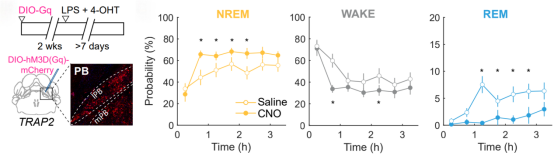
Fig. 2 Nonrapid eye movement sleep-promoting roles of LPS-activated NST neurons and their PB targets
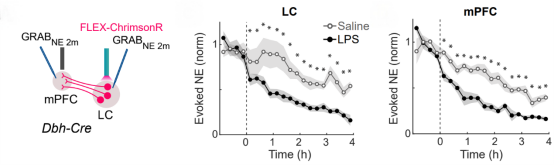
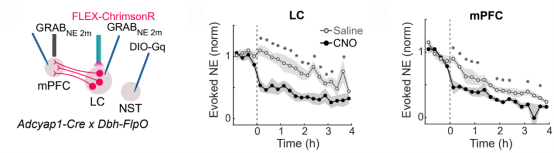
Fig. 3 Suppression of LC norepinephrine release by LPS and activation of NST neurons
talent@smart.org.cn
researcher@smart.org.cn
recruitment@smart.org.cn
graduate_office@smart.org.cn
graduate_admission@smart.org.cn
otl@smart.org.cn
smartfund@smart.org.cn
pr@smart.org.cn
Subscription successful! Thank you for following SMART.