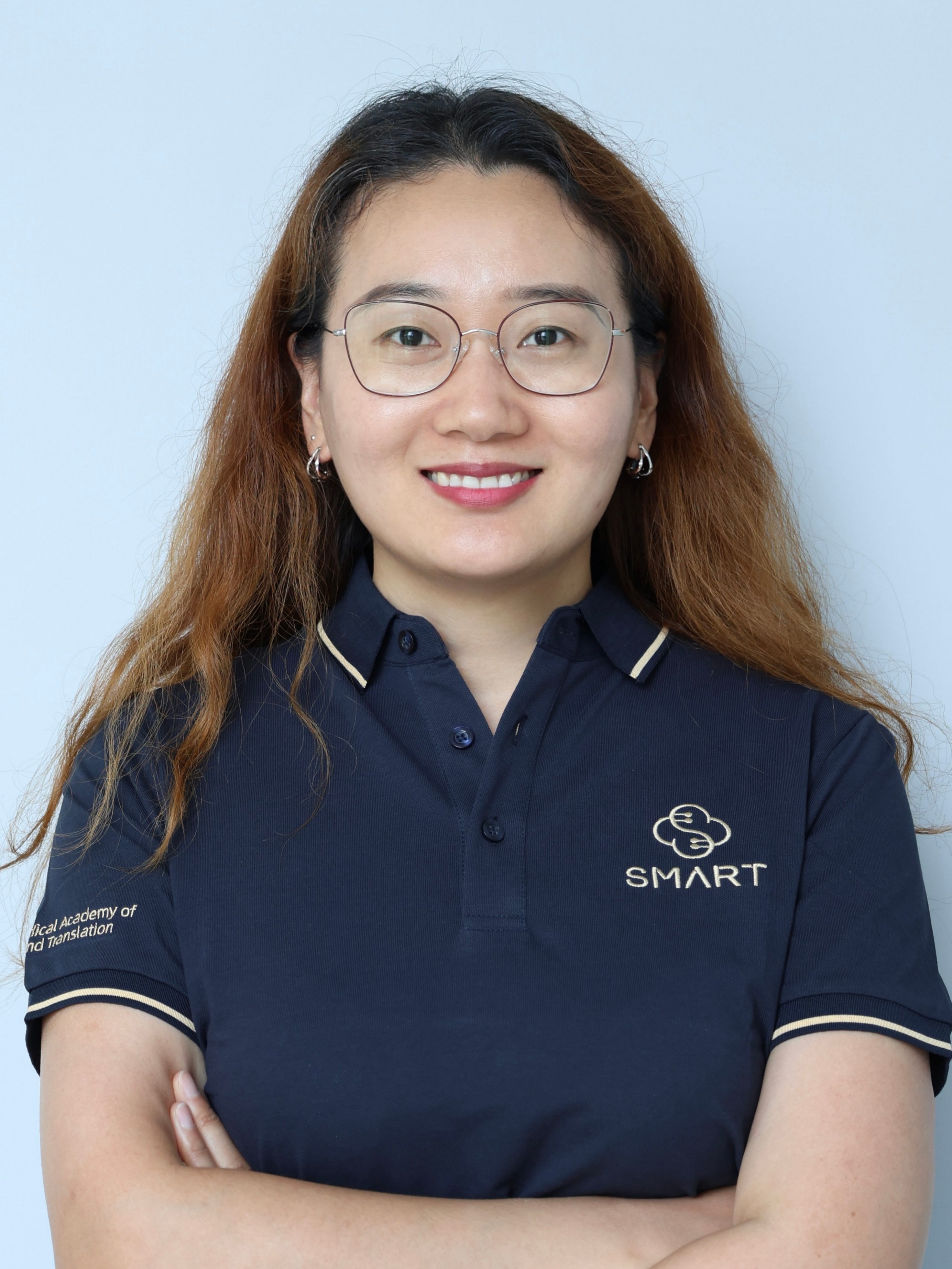
特聘研究员
分子细胞生物学和发育生物学
sundaxiao@smart.org.cn
陈星含(chenxinghan@smart.org.cn)
多细胞生命系统的正常发育与功能维持,依赖于从分子组装、细胞连接到组织稳态的跨尺度精确组织。这一过程需要高度时空协调的调控机制,而揭示不同尺度之间如何实现有序耦合与动态协同,是理解生命系统复杂性与稳健性的核心科学问题之一。
孙大晓博士长期致力于发展定量与跨学科生物学研究方法,聚焦生物大分子相分离在细胞连接、组织发育及稳态维持中的作用机制,系统研究生命系统跨尺度组装的基本规律。她建立了融合自下而上体外重构、生物物理建模与组织生物学验证的研究范式,阐明了上皮组织屏障形成与维持的关键分子机制及其物理组织原则。
未来,孙大晓博士课题组将进一步拓展这一跨学科研究体系,重点围绕上皮屏障系统与心脏系统,构建“分子-细胞-组织”多尺度整合研究框架,系统解析跨尺度结构组装、机械与电信号耦合以及疾病发生机制。研究将聚焦遗传性心肌病、炎症性肠炎等重大疾病,探索其早期发生的关键调控原理,为疾病的精准诊断与靶向干预提供新的理论基础。
孙大晓博士长期致力于揭示生命系统的跨尺度组装机制,尤其关注多细胞组织形成与稳态维持中的生物物理规律。她率先发现并系统阐明了生物大分子相分离在细胞连接、组织形成及组织稳态中的核心调控作用。以上皮组织紧密连接(tight junction)为研究模型,她取得了以下代表性成果:(1)提出细胞连接形成的新机制:首次揭示蛋白质表面相分离与局部细胞骨架协同作用,共同驱动紧密连接带的形成,提出了区别于传统静态组装模型的动态组织新机制。(2)建立跨尺度定量研究范式:整合体外重构、生物物理建模与组织生物学验证,构建了从分子到组织的系统性研究路径,并通过定量模型揭示了生物膜区域化及其空间调控的普适规律。此外,孙大晓博士在博士期间首次发现液态凝聚体参与选择性自噬底物的识别与空间起始过程,突破了传统“固体聚集体驱动自噬”的经典认知,为理解相分离在细胞稳态维持与细胞降解过程中的功能提供了新的理论框架。
2026-至今,深圳医学科学院特聘研究员
2019-2026,德国马普学会分子细胞与遗传所和德累斯顿工业大学,博士后
2018-2019, 清华大学,生命科学学院,博士后
2013-2018,清华大学,生命科学学院, 生物学专业,博士
2009-2013,山东大学,生命科学学院, 生物技术专业(基地班),学士
独立加速奖,德国科学基金(DFG), 2024
优秀墙报奖,细胞紧密连接国际学术会议“Tight Junctions: from Structure and Development to Therapeutics”,2023
优秀墙报奖,欧洲分子生物实验室(EMBL)国际学术会议 “Cellular mechanisms driven by phase separation”, 2022
1. Hiroyuki Uechi, Daxiao Sun, Yuki Saeki, Tetsuya Hiraiwa, Alf Honigmann, Anthony A Hyman, Erina Kuranaga (2026). A conserved motif tunes Sidekick condensate dynamics to control tricellular junction recruitment during epithelial remodeling. Cell Reports 45. 10.1016/j.celrep.2026.117336.
2. Daxiao Sun# *, Xueping Zhao#, Tina Wiegand, Cecilie Martin-Lemaitre, Tom Borianne, Lennart Kleinschmidt, Stephan W Grill, Anthony A Hyman, Christoph Weber*, and Alf Honigmann* (2025). Assembly of tight junction belts by ZO1 surface condensation and local actin polymerization. Developmental Cell 60, 1234-1250.e1236. 10.1016/j.devcel.2024.12.012.
3. Xueping Zhao #, Daxiao Sun #, Giacomo Bartolucci, Anthony A Hyman, Alf Honigmann, and Christoph A Weber (2025). Theory of non-dilute surface binding and phase separation applied to membrane-binding proteins. eLife 14:RP105980 https://doi.org/10.7554/eLife.105980.1
4. Xuezhao Feng#, Daxiao Sun#*, Yanchang Li#, Jinpei Zhang#, Shiyu Liu, Dachuan Zhang, Jingxiang Zheng, Qing Xi, Haisha Liang, Wenkang Zhao, Ying Li, Mengbo Xu, Jiayu He, Tong Liu, Ayshamgul Hasim, Meisheng Ma, Ping Xu*, and Na Mi* (2023). Local membrane source gathering by p62 body drives autophagosome formation. Nat Commun 14, 7338. 10.1038/s41467-023-42829-8.
5. Zheng Shen, Daxiao Sun, Adriana Savastano, Sára Joana Varga, Maria-Sol Cima-Omori, Stefan Becker, Alf Honigmann, and Markus Zweckstetter (2023). Multivalent Tau/PSD-95 interactions arrest in vitro condensates and clusters mimicking the postsynaptic density. Nat Commun 14, 6839. 10.1038/s41467-023-42295-2.
6. Daxiao Sun, Isabel LuValle-Burke, Karina Pombo-García, and Alf Honigmann (2022). Biomolecular condensates in epithelial junctions. Curr Opin Cell Biol 77: 102089. 10.1016/j.ceb.2022.102089.
7. Xuezhao Feng, Wanqing Du, Mingrui Ding, Wenkang Zhao, Xirenayi Xirefu, Meisheng Ma, Yuhui Zhuang, Xiaoyu Fu, Jiangfeng Shen, Jinpei Zhang, Xiuying Lei, Daxiao Sun, Qing Xi, Yiliyasi Aisa, Qian Chen, Ying Li, Wenjuan Wang, Shanjin Huang, Li Yu, Pilong Li, and Na Mi (2022). Myosin 1D and the branched actin network control the condensation of p62 bodies. Cell Res 32(7): 659-669. 10.1038/s41422-022-00662-6.
8. Yukako Oda, Chisato Takahashi, Shota Harada, Shun Nakamura, Daxiao Sun, Kazumi Kiso, Yuko Urata, Hitoshi Miyachi, Yoshinori Fujiyoshi, Alf Honigmann, Seiichi Uchida, Yasushi Ishihama, and Fumiko Toyoshima (2021). Discovery of anti- inflammatory physiological peptides that promote tissue repair by reinforcing epithelial barrier formation. Science Advances 7(47). 10.1126/sciadv.abj6895.
9. Yuting Zhao, Zhongju Zou, Daxiao Sun, Yue Li, Sangita C Sinha, Li Yu, Lynda Bennett, and Beth Levine (2021). GLIPR2 is a negative regulator of autophagy and the BECN1-ATG14-containing phosphatidylinositol 3-kinase complex. Autophagy 17(10): 2891-2904. 10.1080/15548627.2020.1847798.
10. Qi Pan, Daxiao Sun, Jianfeng Xue, Jie Hao, Hansen Zhao, Xijian Lin, Li Yu, and Yan He (2021). "Real-Time Study of Protein Phase Separation with Spatiotemporal Analysis of Single-Nanoparticle Trajectories." Acs Nano 15(1): 539-549. 10.1021/acsnano.0c05486.
11. Daxiao Sun, Rongbo Wu, Pilong Li, and Li Yu (2020). Phase Separation in Regulation of Aggrephagy. Journal of Molecular Biology 432(1): 160-169. 10.1016/j.jmb.2019.06.026.
12. Daxiao Sun#, Rongbo Wu#, Jingxiang Zheng, Pilong Li, and Li Yu (2018). Polyubiquitin chain-induced p62 phase separation drives autophagic cargo segregation. Cell Res 28, 405-415. 10.1038/s41422-018-0017-7.
13. Rui Chen, Yilong Zou, Dongxue Mao, Daxiao Sun, Guanguang Gao, Jingwen Shi, Xiaoqing Liu, Chen Zhu, Mingyu Yang, Wanlu Ye, Qianqian Hao, Ruiqiang Li, and Li Yu (2014). The general amino acid control pathway regulates mTOR and autophagy during serum/glutamine starvation. J Cell Biol 206, 173-182. 10.1083/jcb.201403009.
talent@smart.org.cn
researcher@smart.org.cn
recruitment@smart.org.cn
graduate_office@smart.org.cn
graduate_admission@smart.org.cn
otl@smart.org.cn
smartfund@smart.org.cn
pr@smart.org.cn