Junior Principal Investigator
Neurobiology
yyyao@smart.org.cn
Jieying Liang (liangjieying@smart.org.cn)
Sleep is fundamental to health. Sleep disorders not only severely impair quality of life, but also substantially increase the risk of cardiovascular, metabolic, and immune-related diseases. However, the underlying mechanisms remain poorly understood.
The Yao Lab is focused on studying the “brain-body” interactions underlying sleep regulation, including:
1.the mechanisms by which peripheral cardiovascular, immune, and metabolic homeostasis regulate sleep, with the goal of identifying the key molecular, cellular, and neural circuit basis underlying the interaction between body homeostasis and sleep;
2.the roles of sleep in regulating and maintaining physiological functions across peripheral systems, especially the cardiovascular system, as well as the pathological alterations of these regulatory mechanisms under diseases.
Using mice as the experimental model, the lab uses a wide range of approaches, including behavioral analysis, EEG/EMG recording, cardiovascular activity monitoring, in vivo neural activity recording, optogenetics and chemogenetics, neural circuit tracing, spatial transcriptomics, single-cell transcriptomics, molecular genetic manipulation, immunohistochemistry, and fluorescence in situ hybridization. Through these approaches, the lab systematically investigates sleep-related brain–body interactions from both the “body-to-brain” and “brain-to-body” perspectives, aiming to uncover the bidirectional mechanisms linking sleep and multisystem homeostasis and to provide new theoretical insights and intervention strategies for sleep disorders and related diseases.

Dr. Yuanyuan Yao received her Ph.D. from the Institute of Neuroscience, Chinese Academy of Sciences in 2016. From 2016 to September 2023, she worked as a postdoctoral fellow and later as an Associate Researcher in the laboratory of Prof. Yang Dan (Member of the U.S. National Academy of Sciences and HHMI Investigator) at the University of California, Berkeley. In September 2023, she joined the Shenzhen Medical Academy of Research and Translation as a junior PI.
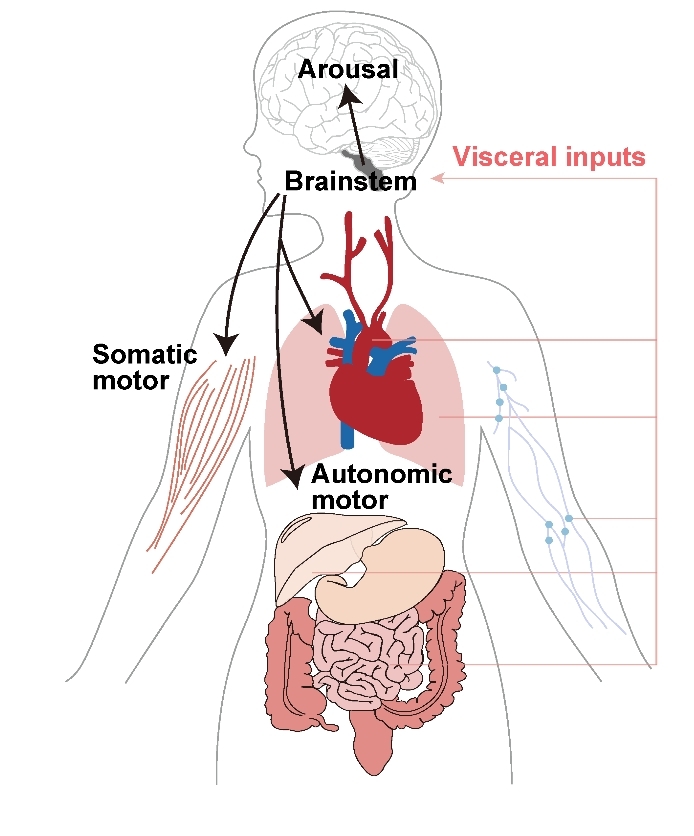
Her research focuses on the “peripheral–central” interactions in sleep regulation. She has systematically uncovered how diverse peripheral physiological signals regulate sleep–wake states, revealing mechanisms by which cardiovascular, immune, and visual signals modulate sleep and wake-related behaviors. These studies provide a new neurobiological framework for understanding the interaction between sleep and peripheral physiological homeostasis.
Her work has been published in leading journals, including Neuron (4 papers), Science Advances, Annual Review of Neuroscience (in press), and Science, and has received broad recognition in the field. Her “cardiovascular–sleep” research was highlighted by Nature Reviews Neuroscience and featured in a dedicated Previews article in Neuron. Her “immune–sleep” study was selected as a Spotlight article in Trends in Neurosciences. In addition, two of her studies on visual circuits contributed as key components to a project awarded the First Prize of the Shanghai Natural Science Award.
2023 - PresentJunior Principal Investigator, Shenzhen Medical Academy of Research and Translation
2019 - 2023Research Associate, University of California at Berkeley/HHMI
2016 - 2019Postdoctoral Researcher, University of California at Berkeley
2008 - 2016PhD, Institute of Neuroscience, Chinese Academy of Sciences, Shanghai, China
2007 - 2007School of Life Sciences, Peking University, Beijing, China
2003 - 2007BS in Biology, School of Life Sciences, Lanzhou University, Lanzhou, China
2022 MCB Outstanding Postdoc Award, UC Berkeley
2020 First prize of 2020 Shanghai Natural Science Award, 4th awardee
2017 Chang Hsiang-Tung Outstanding Thesis Award
2016 Outstanding PhD graduate in Shanghai
2015 The Ray Wu Prize for Excellence
2014 Invited Participant of the 64th Nobel Laureates Meeting in Lindau
2014 First Prize of National Scholarship Award
2013 Collaborative Scholarship Funded by the National Institute of Genetics, Japan
2013 Sanofi Best Paper Award
2012, 2013 Cold Spring Harbor Asia Fellowship
2012 Annual Scientific Meeting of Institute of Neuroscience, 2nd prize of oral presentation
2006 Hui-Chun Chin and Tsung-Dao Lee Chinese Undergraduate Research Endowment
2003-2007 Scholarship Awards of Lanzhou University
First Prize of National Scholarship Award
Guo-Chang Zheng Undergraduate Scholarship
* for co-author.
1. Darmohray, D., Sima, J., Chen, C. H., Silverman, D., Chen, C., Xu, A., Yao, Y.*, & Dan, Y*. (2025). Brainstem circuit for sickness-induced sleep. Science Advances, 11(50), eady0245.
2.Yao, Y.* and Dan, Y.* Body-brain integration: the lower brainstem in sleep-wake regulation. Annual Review of Neuroscience (in press).
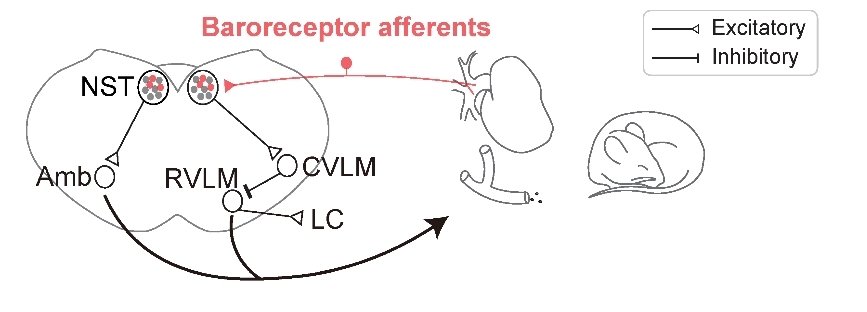
3.Yao, Y., Zeke, B., Saffari Doost, M., Tso, C.F., Darmohray, D., Silverman, D., Liu, D., Chen, M., Cetin., A., Yao, S., Zeng, H. and Dan, Y.(2022)Cardiovascular baroreflex circuit moonlights in sleep control. Neuron 110, 3986-3999.
4.Liu, D., Li, W., Ma, C., Zheng, W., Yao, Y., Tso, C.F., Zhong, P., Chen, X., Song, J.H., Choi, W., Paik, S.B., Han, H. and Dan, Y.(2020)A common hub for sleep and motor control in the substantia nigra. Science 367, 440-445.
5.Zhang, B.* , Yao, Y.* , Zhang, H., Kawakami, K., and Du, J. (2017). Left habenula mediates lightpreference behavior in zebrafish via an asymmetry visual pathway. Neuron 93, 914-928.
6.Yao, Y.*, Li, X. * , Zhang, B. * , Yin, C., Liu, Y., Chen, W., Zeng, S. and Du, J. (2016) Visual cue-specific dopaminergic control of visuomotor transformation and behavior selection. Neuron 89, 598- 612
7.Yao, Y. (2016). Exploring neural substrates underlying the execution of behavior across the whole brain. Neurosci Bull 32, 505-507.
8.Wei, H., Yao, Y., Zhang, R., Zhao, X., Du, J. (2012). Activity-induced long-term potentiation of excitatory synapses in developing zebrafish retina in vivo. Neuron 75, 479-489.