特聘研究员
神经生物学
yyyao@smart.org.cn
2023 - 至今深圳医学科学院 特聘研究员
2019 - 2023加州大学伯克利分校/霍华德休斯医学研究所 副研究员
2016 - 2019加州大学伯克利分校 博士后
2008 - 2016中国科学院大学 博士
姚园园博士2016年毕业于中科院神经科学研究所;2016年至2023年9月于加州大学伯克利分校丹扬教授(美国科学院院士,HHMI investigator)实验室做博后和副研究员;2023年9月全职加入深圳医学科学院,担任独立课题组组长。
围绕睡眠的“外周-中枢”互作机制,解析了不同外周生理信号调控睡眠-觉醒的机制,揭示了心血管、免疫、视觉信号调控睡眠和觉醒相关行为机制,为睡眠与机体外周生理稳态互作提供了新的神经生物学基础。相关成果发表于 Neuron(4篇)、Science Advances、Annual Review of Neuroscience、Science等期刊,受到领域广泛关注:“心血管-睡眠”研究被 Nature Reviews Neuroscience 作为亮点研究专题报道,Neuron 发表 Previews 专文进行评述;“免疫-睡眠”研究被 Trends in Neuroscience 作为 Spotlight 推荐;两项视觉研究成果是上海市自然科学奖一等奖项目的两个重要部分。
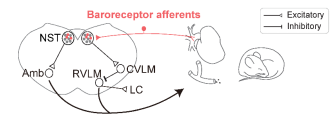
睡眠是生命健康的重要基础,睡眠障碍会显著增加心血管、代谢和免疫相关疾病的风险,但机制仍不清楚。
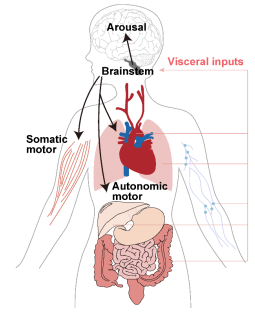
姚园园实验室致力于研究睡眠的“脑-体”互作机制,重点关注:1)外周心血管、免疫和代谢稳态调控睡眠的机制,解析机体稳态与睡眠互作的关键分子、细胞和环路基础;2)睡眠对心血管等外周多系统生理功能的调节和维持作用,及其在病理状态下的异常改变。
实验室以小鼠为主要研究模型,利用动物行为学、脑电/肌电记录、心血管活动监测、活体神经活动记录、光/化学遗传学、神经示踪、空间转录组学、单细胞转录组、分子遗传操作、免疫组化和荧光原位杂交等技术,从“体-脑”和“脑-体”两个层面开展系统研究,旨在揭示睡眠与机体多系统稳态之间的双向互作的机制,并为相关疾病的治疗提供新的理论依据和干预策略。
2022 MCB Outstanding Postdoc Award, UC Berkeley
2020 First prize of 2020 Shanghai Natural Science Award, 4th awardee
2017 Chang Hsiang-Tung Outstanding Thesis Award
2016 Outstanding PhD graduate in Shanghai
2015 The Ray Wu Prize for Excellence
2014 Invited Participant of the 64th Nobel Laureates Meeting in Lindau
2014 First Prize of National Scholarship Award
2013 Collaborative Scholarship Funded by the National Institute of Genetics, Japan
2013 Sanofi Best Paper Award
2012, 2013 Cold Spring Harbor Asia Fellowship
2012 Annual Scientific Meeting of Institute of Neuroscience, 2nd prize of oral presentation
2006 Hui-Chun Chin and Tsung-Dao Lee Chinese Undergraduate Research Endowment
2003-2007 Scholarship Awards of Lanzhou University
First Prize of National Scholarship Award
Guo-Chang Zheng Undergraduate Scholarship
*代表共同第一作者或共同通讯作者
1. Darmohray, D., Sima, J., Chen, C. H., Silverman, D., Chen, C., Xu, A., Yao, Y.*, & Dan, Y*. (2025). Brainstem circuit for sickness-induced sleep. Science Advances, 11(50), eady0245. (* Co-corresponding author)
2. Yao, Y.* and Dan, Y.* Body-brain integration: the lower brainstem in sleep-wake regulation. Annual Review of Neuroscience (in press). (* Co-corresponding author)
3.Yao, Y., Zeke, B., Saffari Doost, M., Tso, C.F., Darmohray, D., Silverman, D., Liu, D., Chen, M., Cetin., A., Yao, S., Zeng, H. and Dan, Y.(2022)Cardiovascular baroreflex circuit moonlights in sleep control. Neuron 110, 3986-3999.
4.Liu, D., Li, W., Ma, C., Zheng, W., Yao, Y., Tso, C.F., Zhong, P., Chen, X., Song, J.H., Choi, W., Paik, S.B., Han, H. and Dan, Y.(2020)A common hub for sleep and motor control in the substantia nigra. Science 367, 440-445.
5.Zhang, B.* , Yao, Y.* , Zhang, H., Kawakami, K., and Du, J. (2017). Left habenula mediates lightpreference behavior in zebrafish via an asymmetry visual pathway. Neuron 93, 914-928. (* Co-first author)
6.Yao, Y.*, Li, X. * , Zhang, B. * , Yin, C., Liu, Y., Chen, W., Zeng, S. and Du, J. (2016) Visual cue-specific dopaminergic control of visuomotor transformation and behavior selection. Neuron 89, 598- 612 (* Co-first author)
7.Yao, Y. (2016). Exploring neural substrates underlying the execution of behavior across the whole brain. Neurosci Bull 32, 505-507.
8.Wei, H., Yao, Y., Zhang, R., Zhao, X., Du, J. (2012). Activity-induced long-term potentiation of excitatory synapses in developing zebrafish retina in vivo. Neuron 75, 479-489.
talent@smart.org.cn
researcher@smart.org.cn
recruitment@smart.org.cn
graduate_office@smart.org.cn
graduate_admission@smart.org.cn
otl@smart.org.cn
smartfund@smart.org.cn
pr@smart.org.cn